Brown It Halfway: The Chicken Move Behind My Stew, Soup, Pot Pie, and Apple Cider Chicken
Now that it's fall, four of my chicken dishes belong on the table: Creole stew chicken, chicken noodle soup, chicken pot pie, and apple cider glazed chicken. They look nothing alike, but they all start with the same reminder from me: brown the chicken, and don't cook it through. Here's how each one plays out, and what finishes the chicken in each.
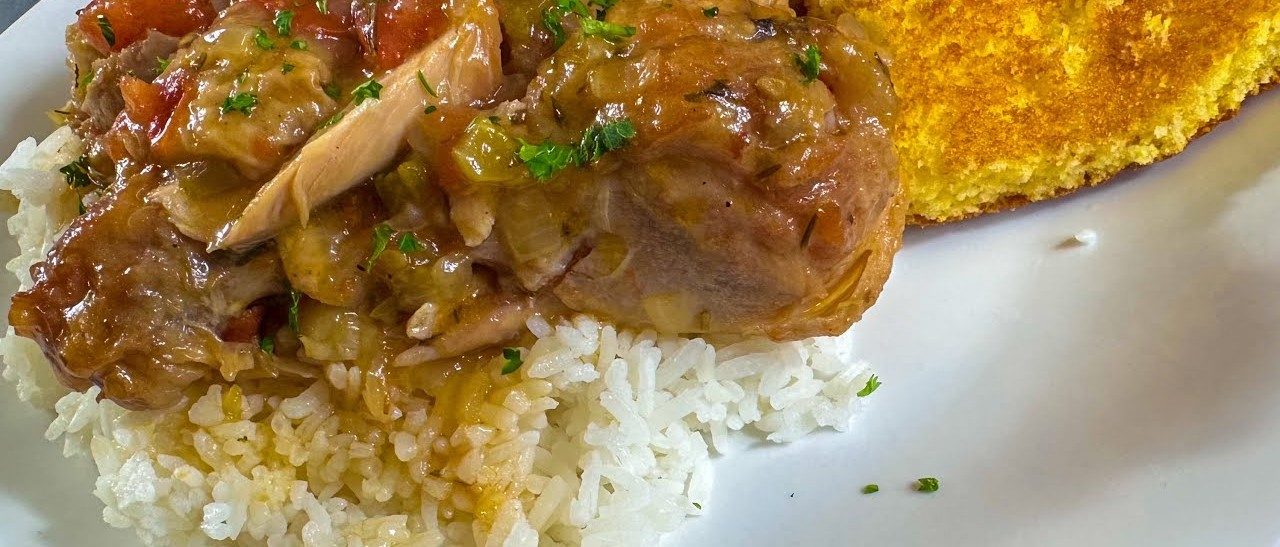
Creole stew chicken: "it's just to brown it"
The clearest version of the reminder is in the stew. I open it as "home style chicken stew" and call it "a comfort food classic." The prep list is three to four tomatoes, one medium onion, two to three celery stalks, four cloves of garlic, and optional parsley for garnish. The chicken is eight drumsticks, per the video description, coated in about a cup to two cups of flour seasoned with salt, pepper, and Creole seasoning, then fried in a Dutch oven. I don't say how much oil goes in.
Then I say it plainly: "the goal with the chicken is not to cook it thoroughly, it's just to brown it." My reason: "it's going to still continue to cook for a good amount of time after we done frying."
Out comes the chicken, and the vegetables go into the same pan: "every vegetable that we prep, we're just gonna go ahead and add that in." The onion, green bell pepper, and garlic sauté for two to three minutes until translucent (I don't state how much bell pepper), then the tomatoes go in for two to three more. Next come two cups of chicken broth, a teaspoon each of thyme, dill weed, and oregano, and one bay leaf. Bring it to a boil, put the chicken back in, and cover it with the heat on low for 45 minutes to an hour. Pull the bay leaf before serving. And taste as you go: I had to add a little more salt and pepper myself, so treat my amounts as a starting point.
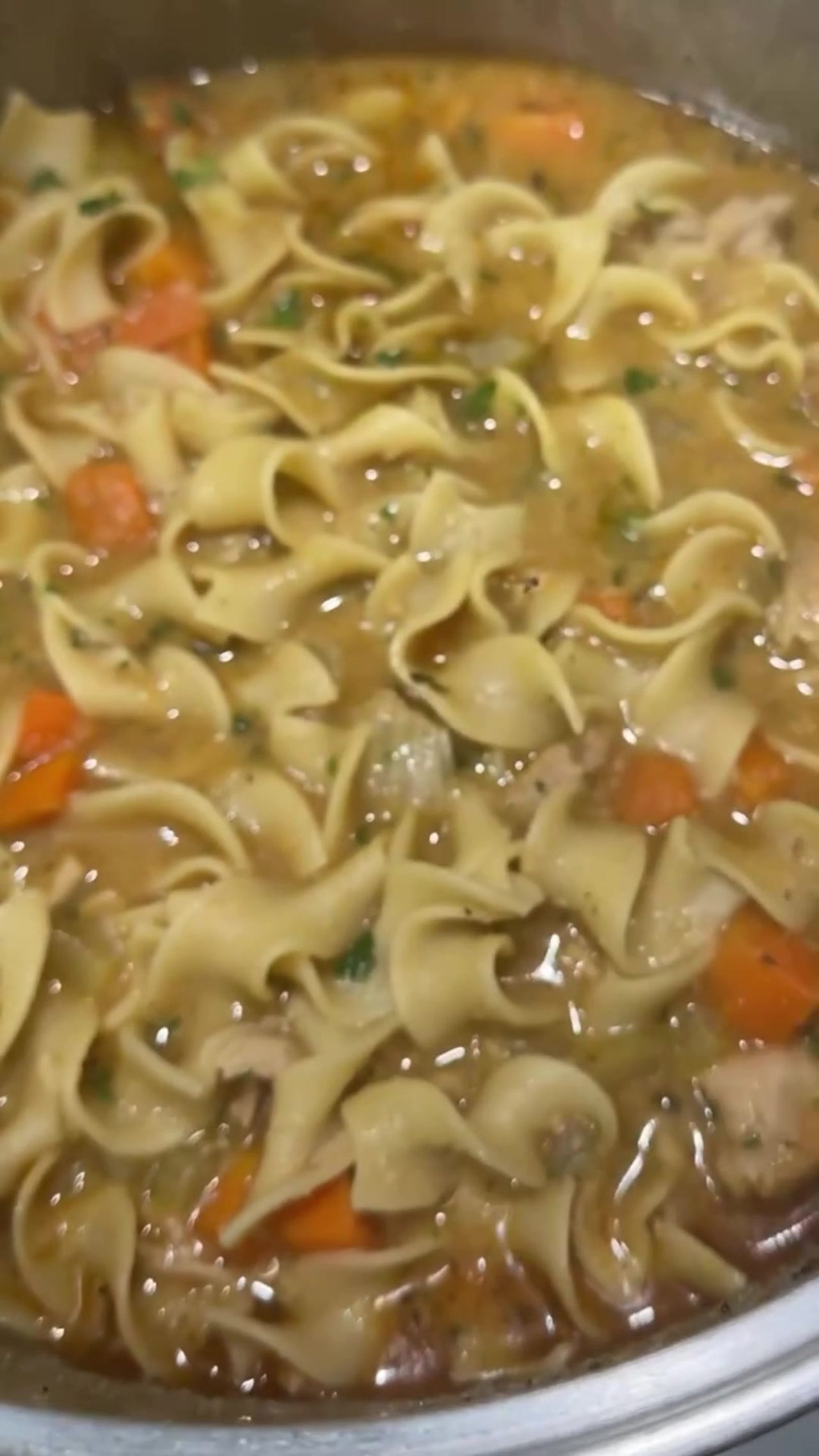
Chicken noodle soup: from scratch, on medium heat
My chicken noodle soup is from scratch, and I say so: "you can go ahead and throw those cans away." It calls for one and a half to two pounds of chicken, thighs or breasts, though dark meat adds more in-depth flavor. It's seasoned with salt, pepper, garlic powder, onion powder, and smoked paprika, then browned on each side in a pan on medium heat. It doesn't have to be cooked all the way through, because it finishes during the simmer, and I say not to turn the heat up too hot.
With the chicken set aside, half a stick of butter goes into the same pan. A diced onion, two to three diced carrots, two chopped celery stalks, and minced garlic sweat down for two to three minutes and get their own round of seasoning. Cream of chicken goes in next, and I don't state an amount for it, so I won't invent one. Then six to eight cups of chicken stock, a lid, and a boil. The chicken goes back in with two cups of egg noodles, three to four thyme sprigs and two bay leaves get laid on top, and it cooks covered for about 30 minutes on low. Take the thyme and bay leaves out before you serve it.
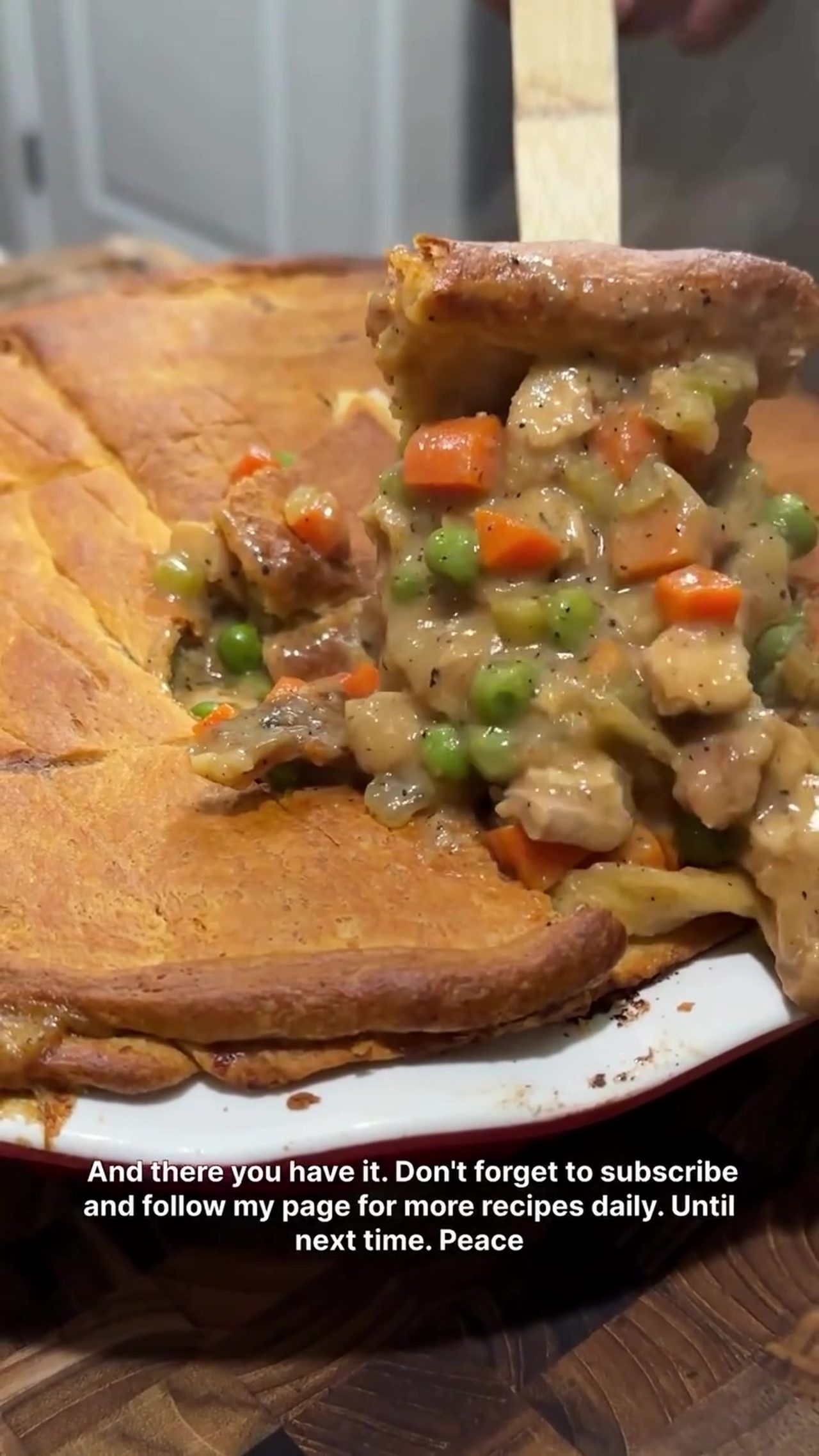
Chicken pot pie: the oven does the second half
For my chicken pot pie I use one and a half pounds of chicken thighs, coated in two tablespoons of olive oil so the seasoning can stick, then seasoned with salt, pepper, paprika, onion powder, and garlic powder. Here the reminder lands mid-recipe: I'm just cooking the chicken halfway on the stove, and it cooks the rest of the way in the oven.
Half a stick of butter goes into the pan with a chopped onion, two diced carrots, and two diced celery stalks for about five minutes, and I dice the chicken while they cook down. A third of a cup of flour thickens it, then one and three-quarter cups of chicken broth, two-thirds of a cup of milk, and a cup of frozen peas (or whatever vegetables you like). Those are the amounts I say out loud. The written caption lists 2 cups of broth and 1/2 cup of milk or cream, so if you see both, that's why.
The chicken goes back into the filling, crescent roll dough goes over it, and the top gets brushed with beaten egg before it bakes at 375 degrees for about 35 minutes. I kept the crust simple: "honestly that's the easiest route to go," and biscuits work too. Two cans of dough gets you bread top and bottom, and one can, cut in half, covers a top crust only.
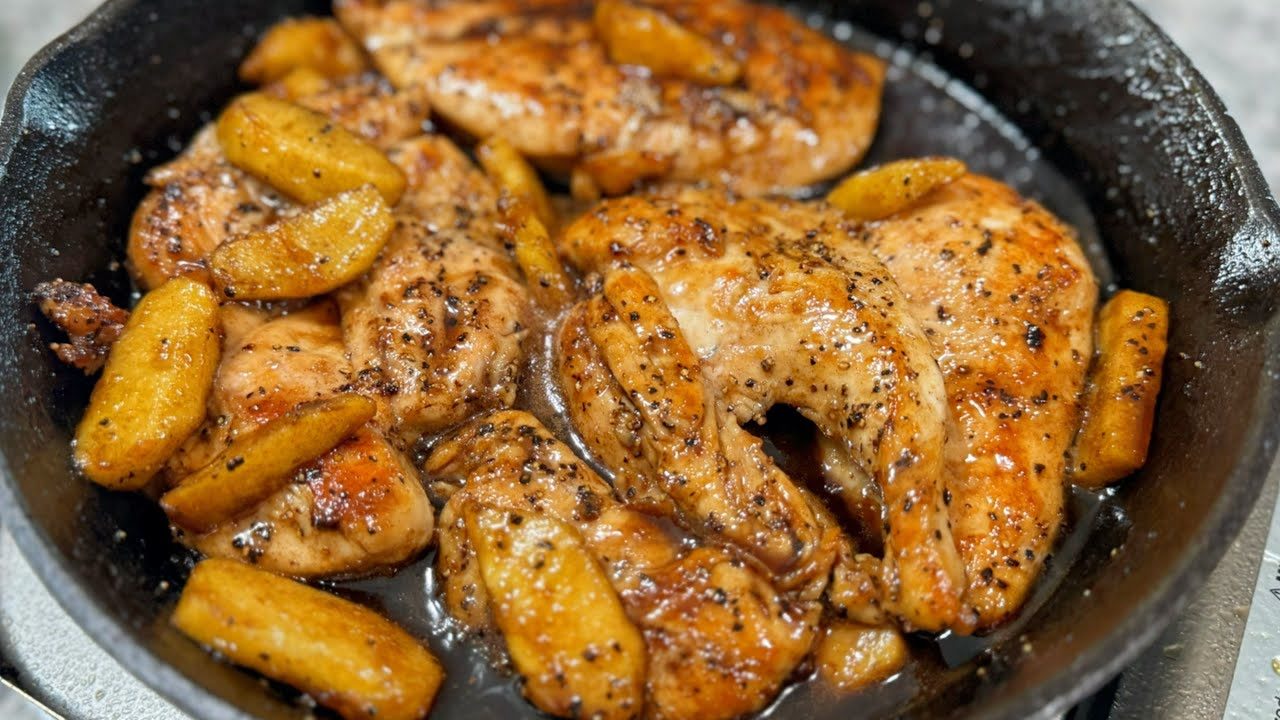
Apple cider glazed chicken: the sauce finishes it
The apple cider glazed chicken is a 15-minute cook, and the reason I give here is dryness: overcooking makes it dry. The chicken, one and a half to two pounds filleted thin (which turns two pieces into four), gets coated in oil, seasoned with salt and pepper, and seared for three to four minutes a side. It comes out before it's cooked through.
Apples go into the same pan, then one cup of apple cider, three tablespoons of apple cider vinegar, the apple-cinnamon seasoning, and two tablespoons of honey or maple syrup, whichever you like. I don't state how much apple or cinnamon seasoning goes in. Once the sauce starts to thicken, the chicken goes back in before it gets too thick. Keep the lid off, baste the sauce over the top, and let it cook down to the thickness you want.
Same first move, four different finishes
Put the four side by side and the first half is the same: the chicken browns, it comes out of the pan, the rest of the dish gets built in that same pan, and the chicken goes back in. What changes is what finishes it.
- Creole stew chicken: the broth, under a lid on low for 45 minutes to an hour.
- Chicken noodle soup: the stock and the noodles, about 30 minutes on low.
- Chicken pot pie: the oven, about 35 minutes at 375 degrees under crescent dough.
- Apple cider glazed chicken: the sauce, lid off, reducing while you baste.
The one thing that doesn't carry over is the pot count. The stew, the soup, and the apple cider chicken are each one-pot dishes. The pot pie isn't: the filling comes together in one pan, but the pie is finished in the oven.