One Pound of Shaved Steak, Three Dinners
One pound of grocery-store shaved steak becomes three different dinners: a one-pot cheesesteak tortellini pasta finished in a beef-broth-and-cream sauce, deep-fried cheesesteak spring rolls with provolone mixed into the filling and layered on the wrapper, and — swapping in ground beef — chop-cheese egg rolls with cheddar under and inside the filling. All three start the same way: brown the meat, pull it from the pan, build the rest of the dish in those drippings, then bring the meat back at the end.
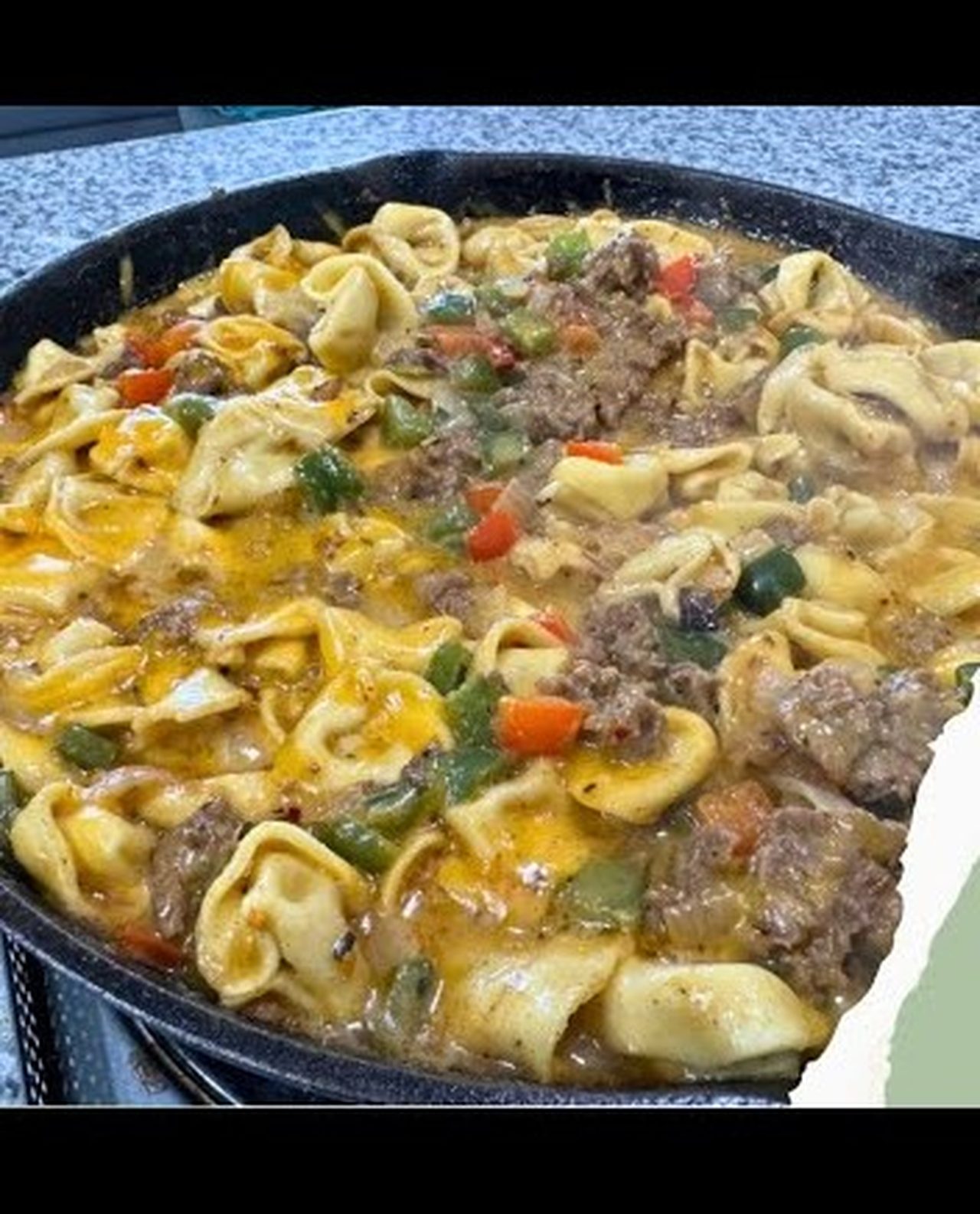
Shaved steak is one of those ingredients I keep coming back to, because it's cheap, it's at any grocery store, and it browns fast enough to build a whole dinner around in one pan. "You can get shaved steak at any grocery store — just ask for shaved steak" is exactly what I say on camera for the spring rolls, and it's true for all three of these builds. I've taken that same pound of meat in three completely different directions — a creamy one-pot pasta, a fried spring roll, and (with ground beef standing in for the cheesesteak idea) an egg roll — and I want to walk through what actually changes between them and what stays exactly the same.
The one thing that never changes: brown it, then get it out of the pan
Every one of these starts the same way. For the cheesesteak tortellini pasta, I wait until the pan just starts to show a little smoke — that's my signal it's hot enough — then the pound of shaved steak goes in to brown. Once it's browned, it comes right back out and gets set aside. I don't build the sauce around the meat sitting in the pan; I build it in the drippings the meat left behind, and the steak doesn't come back until the very end. That's the backbone of the whole dish: brown, pull, build, return.
Where the tortellini pasta earns "one pot"
After the steak comes out, the half stick of butter goes into that same pan — I use garlic butter, but regular works fine — and before it's even fully melted, in go the chopped onions and both bell peppers (one green, one red). They sauté for 5 to 6 minutes, until the peppers start turning translucent, and that's when the seasoning goes in: Cajun blend, garlic powder, a little black pepper (not too much), red chili flakes if you want heat, and salt.
Here's the detail that matters more than people expect: just one tablespoon of flour goes over those vegetables — "not so much of it" — mixed in and toasted for 2 to 3 minutes. That's the whole roux. Then two cups of beef broth deglaze the pan slowly, followed by a half cup of heavy whipping cream, and then shredded cheddar stirred in until the sauce turns smooth. I always say to use freshly grated cheese here instead of the pre-shredded bag — the packaged stuff doesn't melt the same way, and if you want that smooth, creamy consistency, grating your own off the block is the move. The already-cooked tortellini and the browned steak go back in last, get topped with a little more cheddar, and the lid goes on for a final 5 to 10 minutes on very low heat, watched closely so nothing scorches on the bottom.
Same steak, totally different format: the spring rolls
The cheesesteak spring rolls take the same cut of meat somewhere the pasta never goes: deep-fried and rolled. Onion and green bell pepper sauté for 3 to 4 minutes, the cooked shaved steak folds back in for another 3 to 4 minutes, and then provolone cheese gets mixed straight into that filling. That's already more cheese than the pasta gets — and then it doubles down, because I lay a slice of provolone on the wrapper itself before the filling ever goes on top. Provolone in the filling AND on the wrapper is the whole reason these come out as cheesy as they do. Roll them tight and fry until golden brown, and you've got a handheld version of the same flavor the pasta builds in a pot.
The cousin dish: chop-cheese egg rolls
The chop-cheese egg rolls aren't built on shaved steak — that one's a pound of ground beef, browned with one whole diced onion until it caramelizes, then folded with sharp cheddar "as much as your heart desires." But it's the same family of thinking as the spring rolls: a cheesesteak-adjacent filling with cheese mixed directly in, then wrapped and fried instead of plated. I lay a bed of shredded cheddar on the wrapper first, then spoon the cooled beef filling on top — cheese under the meat as well as inside it, the same doubled-up logic as the spring rolls, just with a different protein.
The rolling is the part that trips people up. I seal mine with plain water instead of an egg wash — "you're safe with water, I've made plenty of egg rolls using water" — but rolling itself is tedious, and if you've never done it before, don't rush it. This batch got exactly 10 rolls out of the pound of beef, roughly 2 to 3 a person for a table of 3 to 4. And the dipping sauce — half a cup mayo, two tablespoons ketchup, a tablespoon of Dijon, a teaspoon of garlic paste (or powder), salt and pepper to taste — is one I stand behind on camera: "this sauce is banging."
What actually changes between the three
Line them up and the pattern is simple. The pasta stays a fork-and-plate one-pot dinner where the sauce is the whole point — broth, cream, and cheese built in stages in the pan the meat browned in. The spring rolls turn the same idea into a fried, handheld format where cheese gets doubled front and back of the wrapper. The chop-cheese egg rolls prove the format survives a protein swap, as long as the "cheese touches the filling from more than one side" instinct stays intact. None of it needs a specialty cut or a specialty market — shaved steak (or, for the egg rolls, plain ground beef) from any grocery store, browned hot and fast, is the whole foundation.
If you're building a bigger beef-and-cheese night
If shaved steak and melted cheese is your lane, a couple of other dishes in my rotation lean the same direction with different formats. My ribeye and potato egg skillet takes a beefier cut into a breakfast-style skillet instead of a pasta or a fried roll — same "brown it hot, build around it" logic, different meal. And if you want the cream-sauce side of the tortellini pasta pushed further, my beef short ribs with Parmesan pasta pairs a slower-cooked cut of beef with a cheese-forward pasta sauce the same way the tortellini does, just with a braise instead of a quick sear.
That's the real lesson from cooking one pound of shaved steak three different ways: the meat is the easy, cheap part. What changes is the format you build it into — a pot, a fryer, or a wrapper — and how many times you let the cheese touch it along the way.
