Steakhouse Dinner at Home, Without the Steakhouse Bill
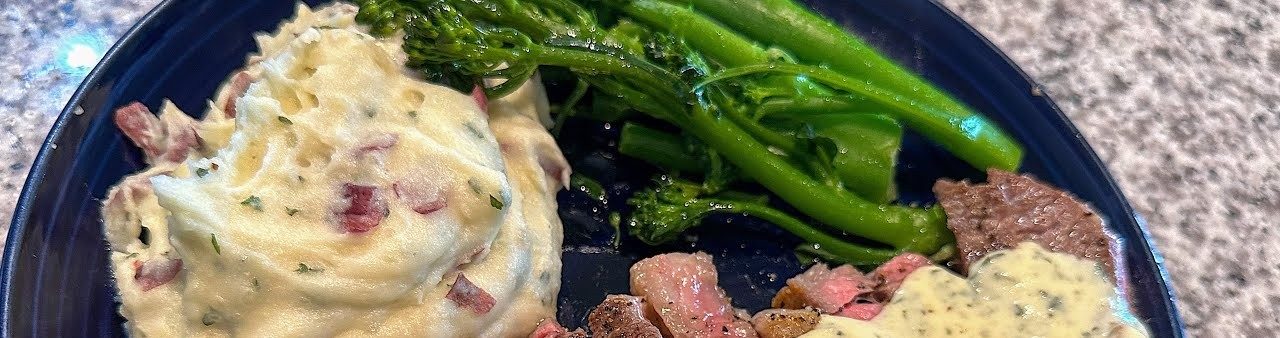
A steakhouse dinner really comes down to a handful of small decisions done right — what temperature the meat starts at, how long you leave it alone in the pan, and what you do with the plate before it goes to the table. I've got three versions of steak night in the rotation that all lean on that same playbook: a full date-night plate with a lemon Parmesan cream sauce, a one-skillet breakfast version finished by thermometer, and a cube-steak route that costs a fraction of what ribeye does. None of them need a reservation.
Start the steak warm, not cold
For the ribeye with lemon Parmesan cream sauce — sized, as I put it on camera, "enough for two, just treat it as a date night" — the first move happens before the pan is even hot. Season both sides of the ribeyes generously with a thin layer of salt and pepper, then let them sit out for about 20 to 30 minutes before they touch any heat. Skip that step and "the outside will cook a lot faster than the inside" — the middle stays raw while the crust goes past burnt. It's the cheapest fix in the whole recipe, and it happens before you've spent a single minute actually cooking.
The salt test, and the rule about not touching the steak
Once the pan is on medium-high with a thin layer of olive oil, the way to know it's actually ready is to drop a little salt in — when it sizzles, the pan's hot enough. From there the steaks go in and stay exactly where they land for four to five minutes a side, no nudging, no checking underneath. That patience is the whole trick behind the sear: "it looks like after four and a half minutes on medium-high heat... it has a perfect sear. It's because we did not move the steak not one time." While the steaks rest on a rack, the sauce goes together in the same window — heavy whipping cream brought to a gentle bubble (never a hard boil, or it separates), salt, garlic powder, and lemon pepper stirred in, then parsley, then Parmesan melted in low and slow until it thickens. Fresh Parmesan is worth the extra step here — the packaged kind has an anti-caking film that keeps it from melting cleanly, so it clumps instead of smoothing into the sauce.
Plating like somebody's paying for it
The last step is the one that actually makes it feel like a steakhouse and not just a kitchen: trim the fat, slice the rested steak into strips, and clean the plate edges before the sauce goes on. "Don't ever give somebody a whole steak to cut themselves," I say — if you're cooking for someone, cut it for them, because "the right cut sizes on the steak can make the steak taste so much more better." The mashed potatoes get the same cream logic as the sauce: heavy whipping cream, not half-and-half, added a little at a time until they're rich without turning watery — half-and-half is "more looser," and the heavy cream gets you a creamier texture without reaching for mayonnaise. A quick two-minute blanch, lid on and heat off, keeps the broccolini from turning to mush.
The skillet breakfast version — same searing logic, a thermometer instead of a guess
The ribeye, potato, and egg skillet runs a looser version of the same steak, built for one pan and finished with a thermometer instead of a stopwatch. The steak still gets a hard two-to-three-minute sear per side, but then butter, several whole garlic cloves, and two rosemary sprigs go into the pan and get spooned over the steak while it bastes — the same restaurant move, just at breakfast scale. The target is 153°F internal, because that's my girlfriend's preferred medium-well; I normally judge doneness by feel, but the thermometer method is the more accurate route if you haven't learned that feel yet. The potatoes get their own shortcut — microwaved five to six minutes, then finished in a fresh pat of butter melted in the same skillet once the steak comes out, so they cook through fast without scorching.
When ribeye isn't in the budget: chicken fried steak
Some weeks the steakhouse plate needs to happen on a cube-steak budget, and that's where chicken fried steak comes in — cube steaks I say you "can find at your local international market." The breading is a double dredge: seasoned flour (garlic powder, onion powder, paprika, a teaspoon of Cajun seasoning, salt, pepper), then an egg wash of two eggs and half a cup of whole milk, then back through the flour again before four cube steaks brown three to four minutes a side, resting warm in a 350°F oven while the rest finish. The gravy is where the same patience lesson shows up again, and I'm honest about failing it once on camera: "the slower you do it, the better... but I got ahead of myself and I accidentally lost my patience." My fix wasn't panic — just staying above the pan, adjusting the heat, and whisking until the lumps smoothed out. A little Creole seasoning stirred in at the end keeps the gravy from tasting bland, served over mashed potatoes and green beans.
More steakhouse-logic plates from the rotation
The same brown-it-first, finish-it-separately idea shows up in a couple of other dinners worth knowing about. My beef short ribs with lemon Parmesan pasta uses the exact same "browning only — not cooking through" approach on the short ribs before they go into a 350°F oven for about an hour with just half a cup of beef broth; the sear builds the crust, the oven finishes the job. And marry me chicken runs the restaurant-plate logic on chicken instead of beef — thighs browned five to six minutes a side first, then baked in a Parmesan cream sauce at 450°F for 25 to 30 minutes. Different proteins, same underlying rule: sear it hard, let a second stage of heat finish it, and don't rush the sauce.

