The Roux, Without Fear
A roux is equal parts high-smoke-point oil and flour, cooked over low-medium heat for 20 to 25 minutes while stirring constantly, until it turns dark brown — the base that gives Cajun gumbo its backbone. The move that matters most: kill the flame the instant it hits dark brown, because the oil gets dangerously hot right at that point and can pop; the same idea, scaled way down, is what thickens the smothered chicken and smothered wings gravies elsewhere on the site.
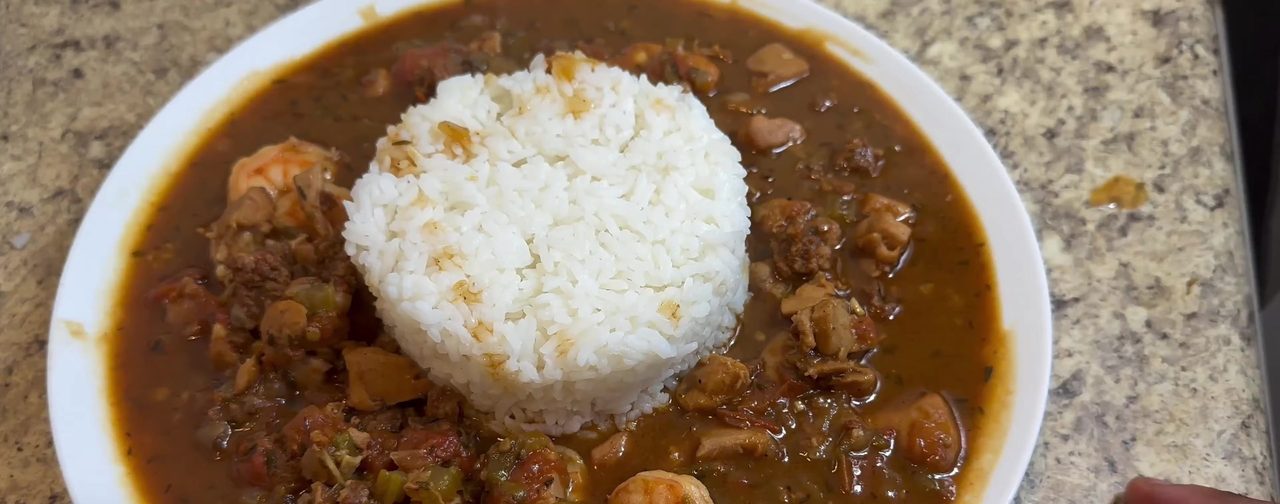
Let me tell you the truth I tell y'all on camera: in my Cajun gumbo, the roux is probably the most complicated part of the whole dish. But if you get this right, it's a smooth sail from there. That's not me being dramatic — it's me handing you the one part people get scared of and walking you through it slow, so you don't have to be scared of it anymore.
A roux is two things cooked together until they turn a color. That's it. Oil and flour, stirred over heat until it goes dark brown, and that dark brown is what gives gumbo its backbone. Once you've made one, the flour-thickened gravies in half my other recipes stop looking like a mystery too. So let's stand over the pot together.
Start with the right oil
Before anything, the oil. I reach for avocado oil, or honestly any type of oil with a high smoke point that won't burn that fast. That word — burn — is the whole reason I pick it. You're about to cook this flour a long time, and a low-smoke oil will scorch on you before the roux ever gets where it needs to go. A high-smoke-point oil buys you the minutes you need.
Into the pot, it's a quarter cup of that oil and a quarter cup of all-purpose flour. Equal parts. You mix it in and you're ready to commit, because from here you don't leave.
The heat: low-medium, and stay there
Here's the number-one thing people get wrong — they crank it. Don't. Turn it down to low-medium heat. I say it twice in the video because it matters that much: low, medium heat. This is a slow build, not a sear. High heat is exactly how you end up with a burnt roux and a do-over.
And plan to be there. This part takes about 20 to 25 minutes, and you're gonna have to stand over this. That's the honest cost of a good roux — twenty-something minutes of your attention. Pour yourself something. You're not going anywhere.
The stirring
Keep stirring it. Not frantic, just constant. You want to keep the flour moving through the oil so no single spot sits still long enough to catch and scorch. As you stir, you'll watch it start to get darker — slowly, a shade at a time. That color change is the whole point of standing there, and it's why this isn't a walk-away step.
The color to wait for
This is the part I most want you to actually see, so let me say it exactly the way I say it on camera: you just wanna keep stirring it until it starts to get darker, and once it gets to this color — the dark brown — that's when you wanna add it. Dark brown. Not blond, not halfway there. That's your signal, and it's also your cue for the very next move.
Wait for it. The whole 20 to 25 minutes exists to get you to this exact shade — don't talk yourself into "close enough" at the halfway color. On camera I called this part crucial, and the color is what makes it crucial.
Kill the flame
Now the move I really don't want you to skip. The moment the roux hits that dark brown, turn off the flame. Right then.
Why? Because it will pop you. At that stage the oil gets a little crazy — it's screaming hot, and if you keep the fire under it, it'll keep darkening past dark brown and it can spit at you while it does. Killing the heat stops the color right where you want it and takes the danger out of the pot. This is the single move that turns "scary" into "calm." You did the hard 20 minutes; don't let the last 30 seconds ruin it.
Then bring the heat back
With the flame off, your vegetables go straight in — I dump in the trinity and the garlic all at once, the celery diced into little quarter-to-eighth-inch cubes, half an onion and half a green bell pepper prepped and set to the side before the stove ever came on. That cooler roux gently cooks the raw edge off the aromatics without scorching.
And then — this is the step everybody forgets, which is why I remind you on camera — remember to turn the heat back up. You killed the flame to save the roux; now you bring it back to cook the vegetables down about five to seven minutes until they're soft. Off to protect the color, back on to keep cooking.
How to keep it from breaking
People always ask how to "save" a roux, and here's my honest answer: the save is built into the front end. I've never had to rescue one on camera because of three choices I make before there's ever a problem — the high-smoke-point oil so it won't burn fast, the low-medium heat so it can't run away, and killing the flame the second it's ready so it doesn't push past dark brown. If it ever smells sharp and burnt or looks black instead of brown, that one's telling you it went too far — better to start the quarter cup and quarter cup over than build a whole gumbo on a burnt base. Prevention is the recipe.
The friendly cousins: smothered gravy
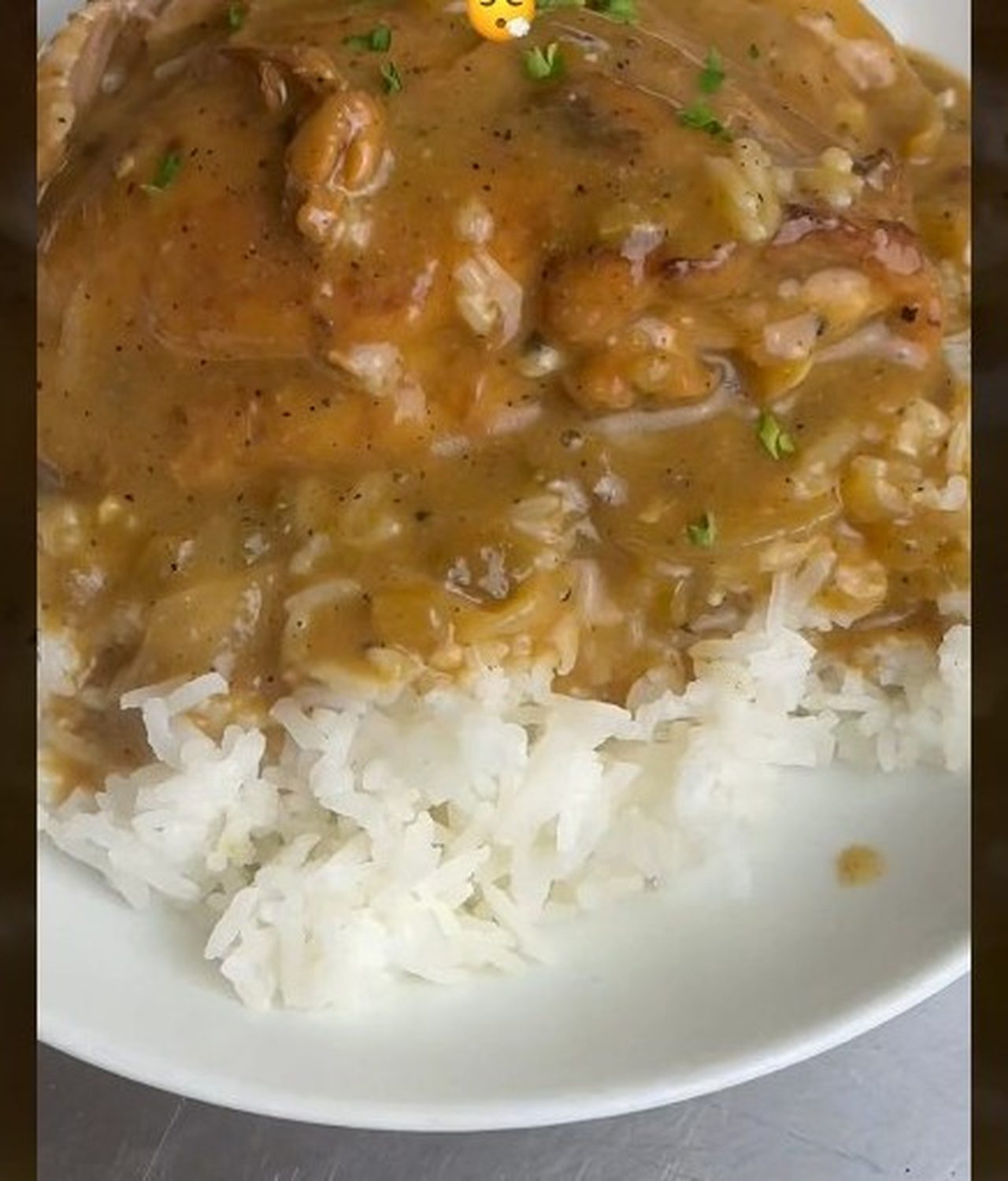
Here's the payoff for facing the roux: every flour-thickened gravy I make is the same idea, just dialed way, way down — minutes instead of a half hour, and no dark-brown to chase.
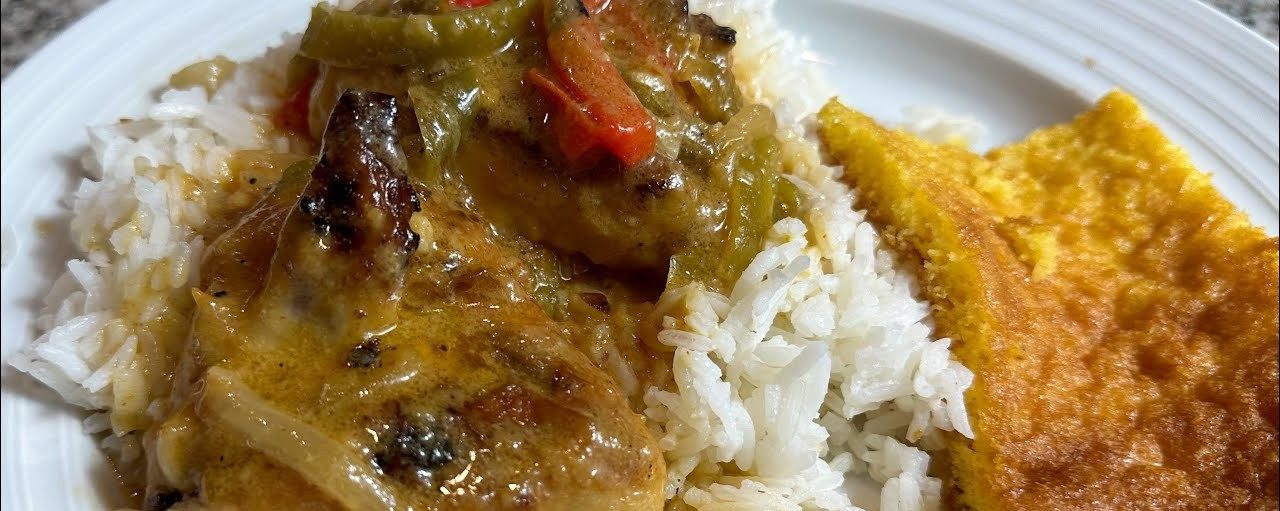
Take my Southern smothered chicken. I brown the thighs, pull them out, sauté the onions, celery, and garlic in that same pot, and then add flour to thicken it up — flour into the fat, exactly like a roux, except I'm not cooking it dark. Right after, about two cups of chicken broth go in slowly, mixing as I pour, so it incorporates instead of clumping. That "slowly" is the whole trick, and it's the same patience the gumbo taught you.
My smothered chicken wings run the same play in a butter base. After the garlic and vegetables sauté, I add about a teaspoon up to a tablespoon of flour — and I tell you straight, it's really up to you how thick you want it. Frying the chicken already thickens that gravy on its own, so the extra flour is just insurance. Then, same as always, slowly incorporate the chicken broth so it has a chance to grab onto the flour you added. If you can do a gumbo roux, this one's a Tuesday.
That's the roux, top to bottom. Right oil, low-medium heat, keep it moving, wait for dark brown, kill the flame, bring the heat back. Make the gumbo once, get that dark brown under your belt, and I promise the rest of the smothered-and-gravy world opens up — smooth sail from here.