Three Chicken Pastas That Punch Above Their View Count
Not every recipe that does well on this channel is the one with the biggest view count. None of these three chicken pastas are the top-of-the-catalog videos, but by comments and engagement per view, they're three of the ones people keep coming back to: chicken fajita pasta, chicken spaghetti, and parm-crusted chicken and spaghetti. I've never actually laid the three side by side before, so here's what each one is doing, and what does (and doesn't) carry across all three.
Chicken fajita pasta: built for a 30-minute weeknight
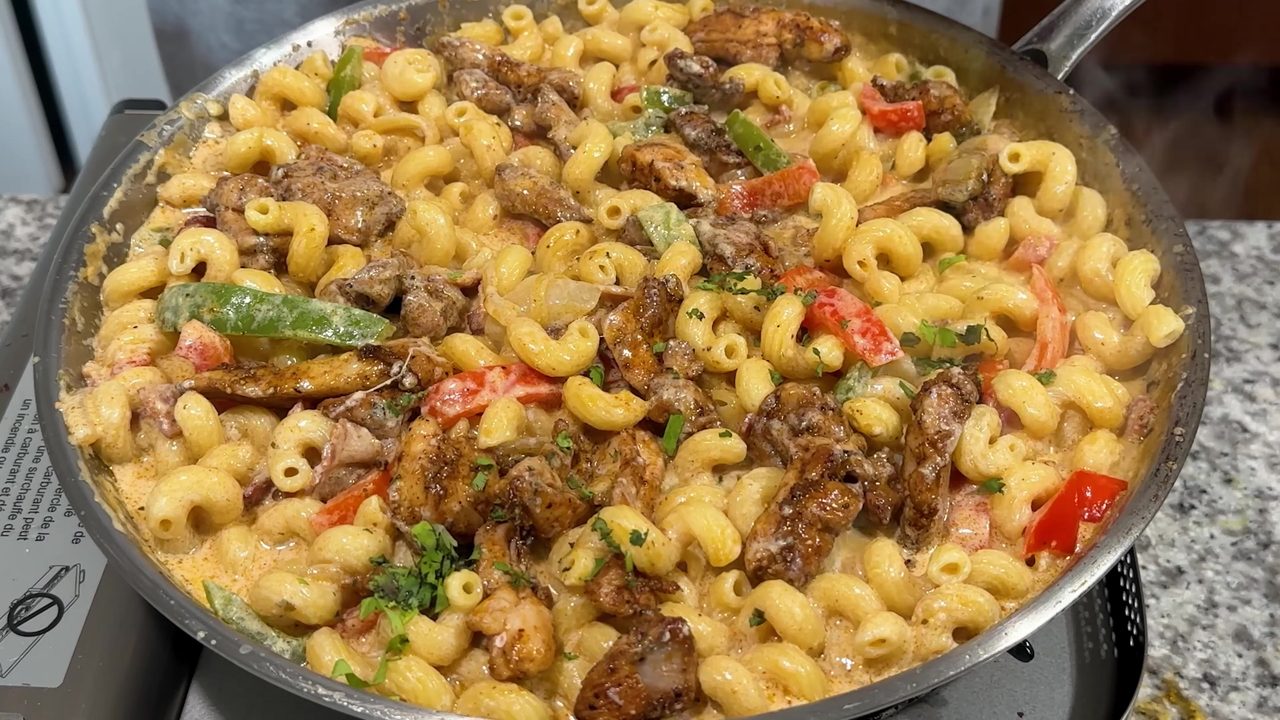
This is the fastest of the three, and I say so on camera: "all of my busy professionals out there, this dish is gonna take you less than 30 minutes to prepare." The chicken — three to four thighs cut into strips — gets seasoned with salt, pepper, and chili powder and cooked until there's no more pink, then set aside. In the same pan, chopped bacon browns in the chicken drippings, garlic butter melts into the crisped bacon, and then sliced onion and red and green bell peppers sauté down before getting their own separate seasoning pass: cumin, chili powder, Cajun seasoning, and salt. The sauce is half and half, thickened with a cup of the starchy water reserved from boiling the cavatappi (the ridged corkscrew noodles I don't even try to pronounce on camera), then two cups of shredded Parmesan stirred in until it's creamy. The al dente pasta finishes right in that sauce, and the chicken folds back in last.
Chicken spaghetti: the one built around the sauce, not the sear
My chicken spaghetti with spinach and sun-dried tomatoes takes a different route to a creamy sauce. I fillet the chicken breasts into thin cutlets rather than pounding them, which gives more surface area and helps them cook evenly, and I only season the meat itself with salt, pepper, and Creole seasoning — "a lot of the flavors gonna come in that sauce so you don't have to over season the chicken." It browns two to three minutes a side for a light char, not cooked through, then comes out while the sauce builds in the same pan: butter, a pinch of chili flakes if you want heat, chopped sun-dried tomatoes, minced garlic, a half to three-quarter cup of chicken broth, then a half to one cup of heavy cream depending on how rich you want it, spinach wilted in, and fresh Parmesan — never the packaged kind, because the anti-caking coating on packaged shredded cheese keeps it from melting smoothly and turns the sauce clumpy instead of creamy. The heat goes down to low once the al dente spaghetti goes in, so the noodles finish absorbing the sauce instead of just getting tossed in it, and the diced chicken folds back in at the very end.
Parm-crusted chicken and spaghetti: the one that bakes instead
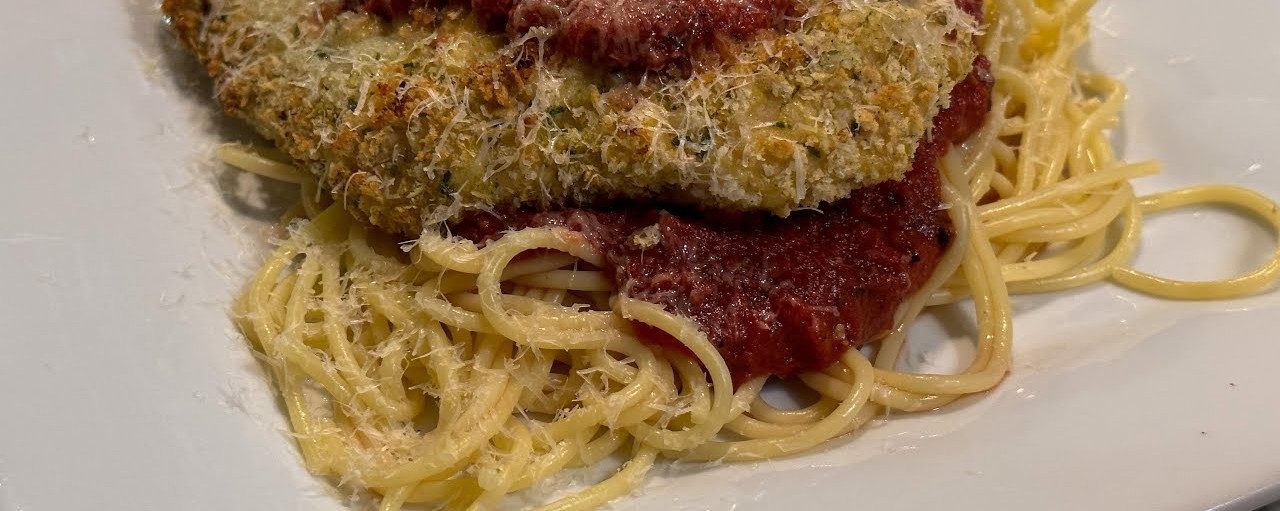
This is the outlier of the three, and it's worth calling out exactly why. Instead of a pan sauce, it's a from-scratch red sauce — two 28-ounce cans of crushed tomatoes seasoned with a half teaspoon each of salt, pepper, garlic powder, dried parsley, onion powder, sugar, and Italian seasoning, then simmered (and tasted, and adjusted) the whole time everything else cooks. The chicken gets filleted, pounded thin with a mallet, and run through a three-station breading — seasoned flour, five whisked eggs, then panko mixed with shredded Parmesan — before baking at 400°F for 15 to 20 minutes, with a minute under the broiler if it needs more color on top. This is also the one dish of the three sized straight from the video: I build it to serve about six, and say so on camera. The noodles get a similar undercook to the other two, but a different fix — pulled around eight minutes instead of the box's ten to eleven, then held in hot water so they stay hot without going soft while the sauce and chicken finish separately. Plating is assembled to order, not folded together in the pan: sauce first, spaghetti, the chicken cutlet on top, a little more sauce, Parmesan to taste — and I keep the sauce light on purpose, "for presentations."
What actually carries across all three, and what doesn't
The clearest thread connecting all three is what happens to the pasta: none of them lets the noodles cook all the way through in the boiling water. The fajita pasta and the spinach chicken spaghetti both pull the noodles at al dente and let them finish absorbing flavor directly in their sauce — chicken spaghetti explicitly on turned-down low heat because "we want the sauce to get inside of that spaghetti." The parm-crusted version breaks from that pattern — since its sauce and pasta never actually combine in the pot, the noodles get undercooked instead for a different reason, then parked in hot water so they don't overcook while they wait. Same instinct (don't fully cook the pasta up front), two different reasons for it.
The "use fresh Parmesan" rule doesn't hold across all three the way you'd expect, either. Chicken spaghetti is explicit that packaged cheese ruins the texture of its cream sauce. Parm-crusted chicken and spaghetti says the opposite — fresh or packaged, "that's really up to you for this dish." The difference tracks the job the Parmesan is doing in each: in chicken spaghetti it's melting straight into a cream sauce, where the packaged kind's anti-clumping coating turns it clumpy; in the parm-crusted version it's getting pressed into breadcrumbs alongside panko, where that same coating never gets the chance to matter.
What's consistent, and honestly the more useful takeaway, is that none of the three leans on a jarred sauce. The fajita pasta's cream sauce is built from dairy and cheese right in the pan the protein cooked in — no broth, just half and half, starchy pasta water, and Parmesan; the chicken spaghetti's sauce takes the same pan-first approach but adds chicken broth to the mix. The red sauce in the parm-crusted version is built from plain crushed tomatoes and a seasoning rack, not a jar off the shelf. If you're looking for the pattern worth stealing across all three, it's that: build the sauce from what's already in the pan or on the shelf, and don't let the noodles finish cooking before the sauce is ready for them.
If you want more one-pan pasta after this
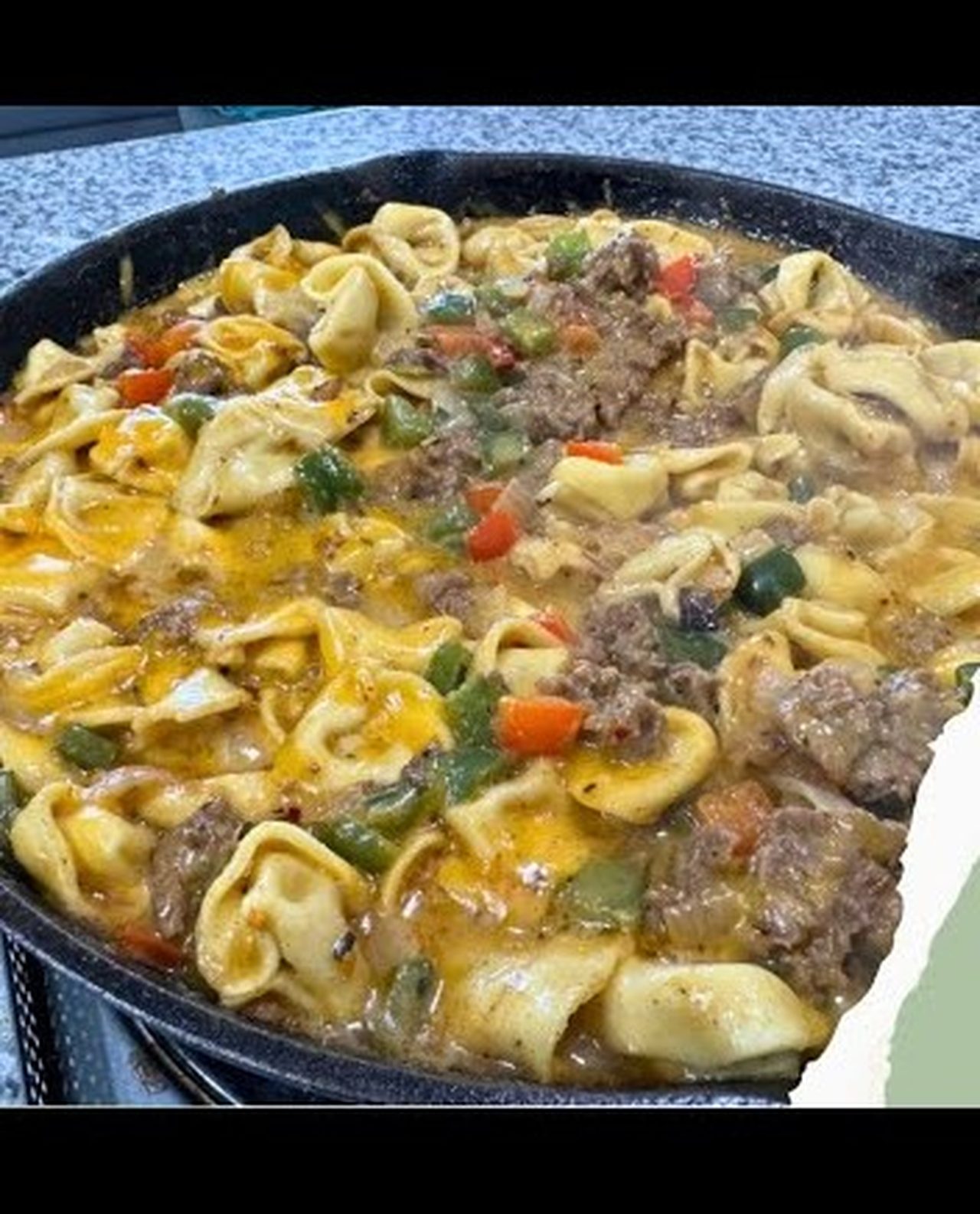
The same "brown it, build the sauce in the same pan, marry it with the noodles at the end" logic that runs through the fajita pasta and the chicken spaghetti shows up again in my cheesesteak tortellini pasta, just with shaved steak standing in for chicken. And if it's the parm-crusted version's from-scratch tomato sauce that caught your attention, my stovetop lasagna runs a similarly hands-on sauce build, minus the oven entirely.