Two Shrimp Curries: The 30-Minute One and the From-Scratch One
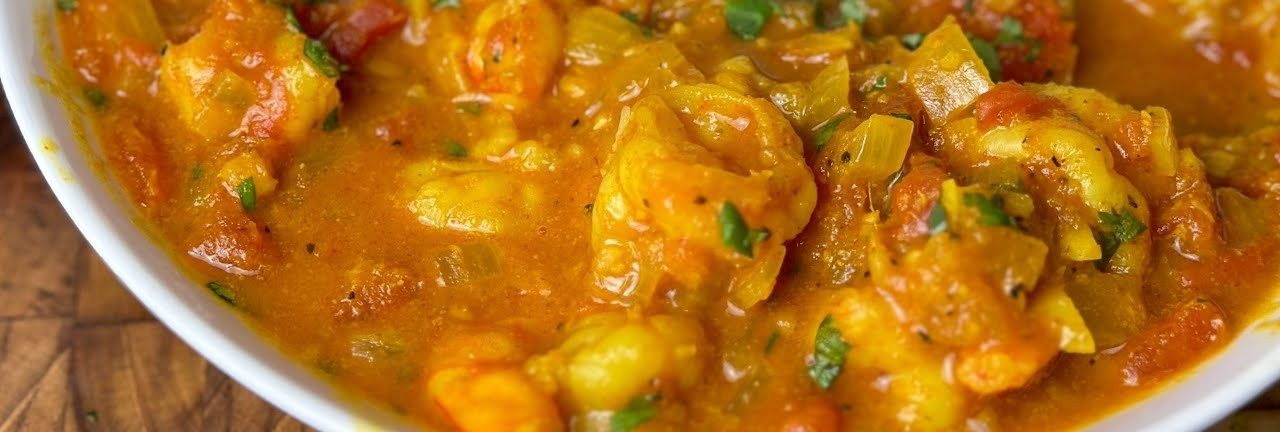
I've got two shrimp curries in the rotation, and I want to be upfront about why they're not the same recipe wearing two names. My easy shrimp curry is the one-pan, thirty-minute version — everything goes into a single pan and the shrimp go in at the end. My shrimp and potato curry is a completely different build: I make my own spicy puree from scratch, thicken the sauce with flour instead of a long simmer, and sear the shrimp separately instead of cooking them in the pot at all. Same protein, same general idea of curry over rice, two different techniques from two different days in my kitchen.
The 30-minute version: everything happens in one pan
This one starts simple: avocado oil in a pan over medium heat, minced garlic for a minute or two, then onion cooked down until it's translucent, then grated ginger. If you want heat, two tablespoons of red curry paste go in next, stirred until the onion is fully coated — skip it entirely if you don't want the spice. Then the coconut milk goes in, followed by a can of diced tomatoes, and this is the one detail worth calling out: keep the juice. "We want that tomato juice" — don't drain the can, pour it all in.
From there it's cardamom, cumin, turmeric, salt, and pepper, tasted and adjusted as you go. The cardamom is worth tracking down if you can — it's best found at an international market — but it's not a dealbreaker if you skip it; the curry still works, it just won't have quite the same authentic depth. Bring it to a boil, then turn it down to low and let it simmer for ten to fifteen minutes, stirring occasionally, until it thickens and you start to see the vegetables float to the top.
The shrimp go in dead last, and that's deliberate. "The reason why I waited till the last minute to add in my shrimp is because I didn't want the shrimp to be overcooked." Cook it on low for about five minutes, just until it's completely pink — that's what keeps it tender instead of rubbery. If you want the sauce even thicker, don't serve it right away: let the pot sit off the heat for five to ten minutes and it firms up on its own.
The from-scratch version: you build the sauce before you build the curry
The shrimp and potato curry skips the jar entirely. Before anything else, I boil chipotle peppers in water for about ten minutes, then everything goes into a food processor together — the boiled chipotles, tomatoes, coriander seasoning, oyster sauce, black pepper, a little garlic, olive oil to loosen it up, lemon zest, and coconut milk. Blend it until it's a thick puree. "I'm teaching you guys how to make this from scratch" — that's the whole point of this version: no shortcut sauce, just a puree I built myself.
While that puree sits to the side, the curry itself starts separately in a wok: butter, onions, bell peppers, and broccoli, then a tablespoon of minced garlic stirred in well. Then comes the part that sounds backwards until you see it work: all-purpose flour stirred into the vegetables to thicken the sauce. "I know that sounds crazy, but that's going to be to thicken up the sauce" — and it is exactly what it does. The puree goes in next, as much as you want, followed by pre-cooked potatoes — microwaved for five to six minutes to speed things up before they ever hit the wok — plus more coconut milk, more puree, and more salt, tasted and adjusted until it's right.
The shrimp never actually go into that pot. I sear them separately on a flat top, laid out in a single layer, about two to three minutes per side, flipped once, until they're seared through. They get plated on top of the finished curry and rice, not stewed into it. If you want rice with it, mine is nothing more than butter, cilantro, and white rice with a little salt — or plain rice works fine too.
Same shrimp, two opposite decisions about how to cook it
Line the two recipes up and the shrimp is where they actually diverge hardest. In the easy version, I've said outright why the shrimp goes in dead last: so it doesn't overcook. It still cooks directly in the sauce, just for the shortest possible window. In the from-scratch version, the shrimp never touches the curry at all — it's seared completely on its own, on a flat top, and only meets the curry when it's plated on top at the very end. Two different relationships between the shrimp and the pot, from two different days of cooking.
The thickening tells the same story. The easy curry thickens itself, just from a fifteen-minute simmer and a five-to-ten-minute rest off the heat — no flour, no puree, nothing extra added for body. The from-scratch curry gets there with an actual thickening agent, flour worked into the vegetables before the sauce even goes in, because the sauce itself is built from a blended puree rather than canned tomatoes and coconut milk going straight into the pan. That's really the difference between these two recipes in one sentence: one thickens by waiting, the other thickens by building.
More one-pot dishes if this is your speed
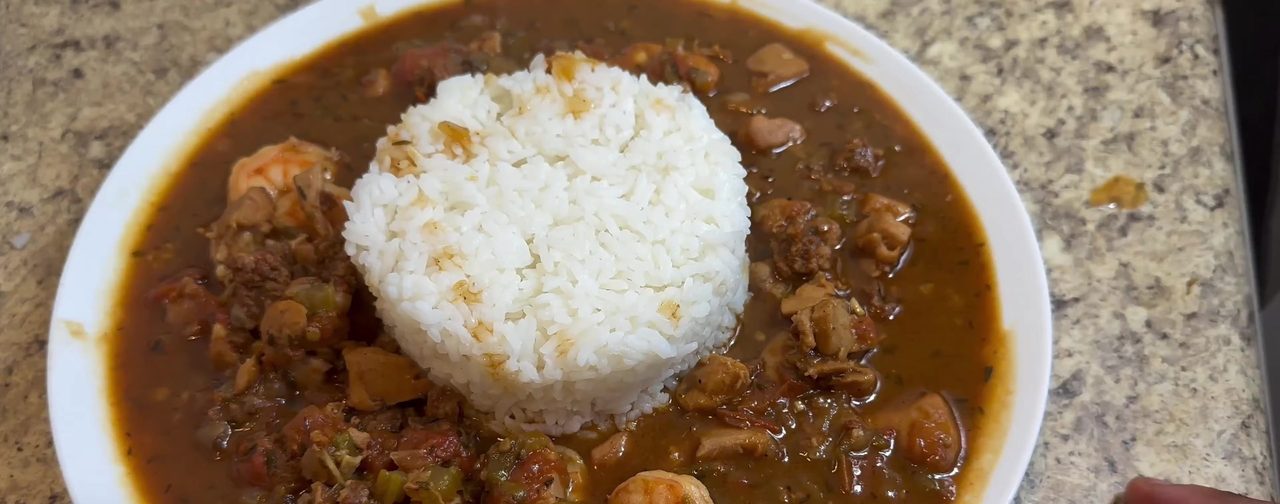
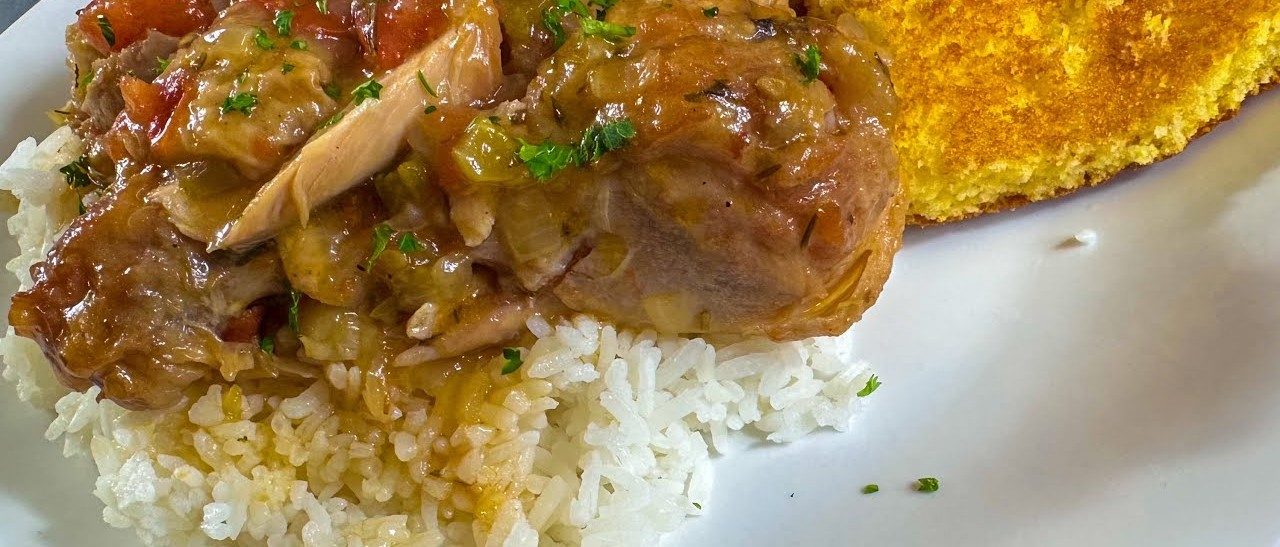
A few other dishes in my rotation run on the same kind of build-it-yourself logic. My Cajun gumbo takes that same "make your own base" idea and pushes it further — a dark roux stirred for twenty to twenty-five minutes in a Dutch oven, then chorizo and chicken cooked in until the chicken's no longer pink, and shrimp stirred in near the end, all in the one pot. My Creole stew chicken fries eight whole flour-coated drumsticks first, then pulls them out to build a tomato-and-broth base in that same pot, before returning them to simmer low for 45 minutes to an hour until it falls together. And if stuffed shrimp is more your speed than curried shrimp, my garlic butter crab-stuffed shrimp butterflies shrimp, stuffs them with a lump crab filling, and bakes them standing up before finishing with a garlic butter drizzle. Different pots, different techniques, same idea running through all of it: build the flavor yourself instead of reaching for a shortcut.