What I Cook Everything In
Nearly every dish on this site comes out of two pans: a cast-iron skillet for everyday searing, simmering, and oven-finishing (Marry Me Chicken, stovetop lasagna, the ribeye-potato-egg skillet), and a Dutch oven for long, low-and-slow cooking like the Cajun gumbo's 45-minute simmer and 20-to-25-minute roux. Buying order for a kitchen from scratch: cast-iron skillet first, Dutch oven second, a meat thermometer third — sheet pans barely make an appearance.

People ask me all the time what pots and pans I'm using, so I figured I'd just lay it out. Nothing here is sponsored — it's genuinely the stuff sitting on my stove, and most of my recipes come down to two pans doing all the work. Here's what each one does, what I'd buy first, and the habits that keep them working.
The cast-iron skillet — my everyday pan
If you've watched more than one of my videos, you already know the cast iron is where I live — it's what I typically cook all of my dishes in. The reason is simple: cast iron heats up all around, so there are pretty much no cold spots like you get with a thinner pan. My habit with it is always the same: get the skillet heated up on medium-high, and once it starts to smoke, add the oil.
One skillet can carry a whole dish from stovetop to oven — my Marry Me Chicken is the perfect example. I brown the chicken thighs right in the cast iron, about five to six minutes a side — browning only, not cooking them through. Once the chicken comes out, I drop three tablespoons of butter into that same hot pan and use it to pull up all the seasoning stuck to the bottom. After the sauce comes together, the chicken goes back in and the whole skillet goes into the oven at 450 degrees for 25 to 30 minutes. No second dish to wash.
A skillet with a lid is also my one-pan simmer setup. My Stovetop Lasagna is built entirely in one skillet — brown the meat, build the sauce, break the noodles right in, then lid on, heat as low as it goes, and simmer about 15 minutes. I'll be real about a mistake I made: the first time, the pasta stuck and started to burn on the bottom, so now I stir partway through the simmer to make sure nothing's catching. Little trick from that video, too: I swirl water in the empty tomato sauce can and pour it over the noodles on top so they get soft as well. Lid back on at the end — once the cheese starts to melt, it's ready.
And then there's the Ribeye, Potatoes & Egg Skillet, where the steak, the potatoes, and the eggs all come out of the same pan. I heat a teaspoon of olive oil, sear the ribeye about two to three minutes a side until I see light char marks, then baste it with butter, garlic, and rosemary, cooking to 153 degrees — that's how my girl likes her steak, medium-well. Once the steak comes out, more butter goes in for the potatoes. Life hack: I microwave the sliced potatoes for about five to six minutes first to soften them up, so they cook quicker and won't burn in the butter. Then it's over-medium eggs right in the leftover butter. One pan, full plate.
The Dutch oven — for the low-and-slow pots
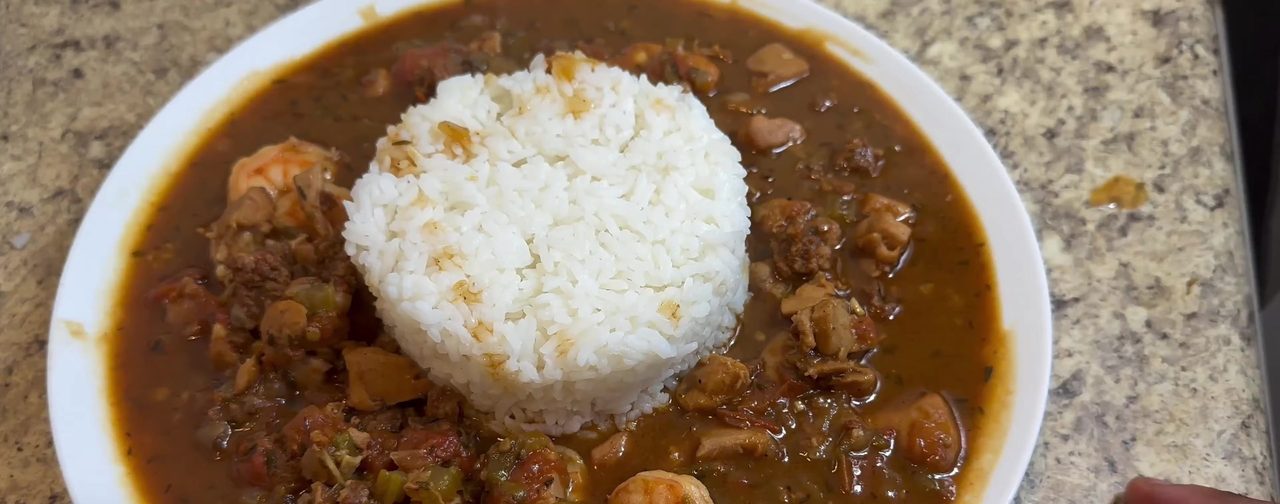
When a dish needs time and depth, I go to the Dutch oven. My Cajun Gumbo is the whole case for it: the roux, the vegetables, both proteins, the broth, the long simmer, and the shrimp at the end all happen in that one red enameled pot.
That roux is why you want a good heavy pot under you. I start with a high-smoke-point oil — I used avocado oil — because you need something that won't burn fast. Then I stand over it on low-medium heat and keep stirring for a solid 20 to 25 minutes until it goes dark brown. It's the most complicated part of the dish, but get it right and it's a smooth sail from there. And here's a safety habit I call out: the second that roux hits dark brown, turn the flame off, because the hot oil will pop and get a little crazy on you. After that, the vegetables and proteins go in, then it's a lid-on simmer for about 45 minutes before the shrimp go in for their last five to seven.
Now, do you need a Dutch oven? Like I said in my buttery baked chicken and veggie rice video: no. But if you have one, it's the best pot to use. What I love about it is that it heats up all around — no hot spots, the whole thing is hot, even the top. Yes, they're expensive, and nobody's paying me to say that — it's just what I've been using for the last few years. No Dutch oven? Use any oven-safe pot with a lid — and no lid, use foil. I've been in every situation.
What about sheet pans?
I'd rather tell you the truth than sell you a list: you won't see me leaning on a sheet pan much. About the only time a baking sheet shows up on my channel is as a tray holding a couple of crab cakes before they cook. Almost everything I make is a one-pot or one-skillet meal, so when a dish needs the oven, the pan just goes in with it — that's the Marry Me Chicken move at 450 degrees.
What I'd buy first
If you're building a kitchen from scratch, here's my honest order:
- A cast-iron skillet. It's what I typically cook all of my dishes in, full stop. It sears, it simmers, and it goes in the oven, so it's doing three pans' worth of work.
- A Dutch oven. The upgrade for gumbo, rice dishes, and anything that needs a long, even simmer with a lid on.
- A meat thermometer. Not a pan, but I'm putting it here anyway: temping is way better and more accurate than guessing. It's how I hit 153 degrees on the ribeye and make sure chicken is past 165 before it leaves my kitchen.
The care habits I actually use
No elaborate ritual — just the things I say on camera because they matter:
- Keep your work area clean as you go. I say it in the gumbo video — clean your area at all times and you won't have any issues. Prep first, set everything aside, then cook.
- Pat your proteins dry before seasoning. With the ribeye I pat it dry, then lightly season both sides before it hits the oil.
- Don't walk away from a hot skillet. My Marry Me Chicken came out a little charred once because I stepped off — so please, don't leave your skillet.
- Stir so nothing sticks. Learned that the hard way on the stovetop lasagna. Same with cheese sauces — when the Parmesan goes in, keep stirring so it doesn't burn to the bottom of the pan.
- Turn the flame off before the oil pops. The moment that gumbo roux goes dark, kill the heat.
None of this is fancy. It's paying attention to the pan in front of you. Two pans, a little attention, and you can cook basically everything I do.