Spicy Baked Chicken and Rice (One Pot)
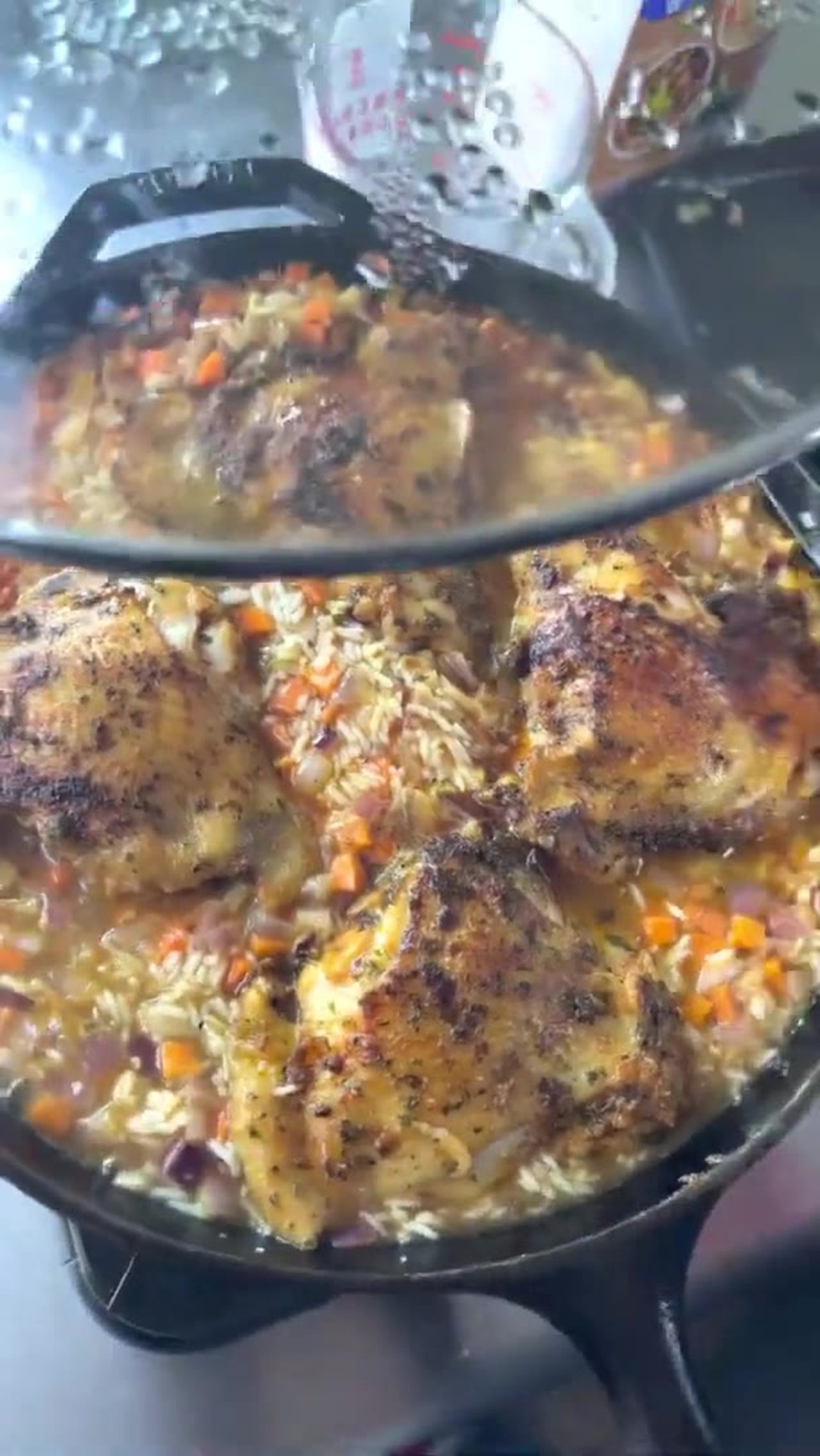
This is my go-to when I want crispy, seasoned chicken thighs and a pan of flavorful rice without dirtying half the kitchen. I sear the thighs skin-side down in a screaming-hot cast iron skillet, build the rice right in all that leftover seasoning and fond, then nestle the chicken back on top and finish the whole thing in the oven. One pan, big flavor, and the rice soaks up everything the chicken left behind.
Right at the top of this video I promise spicy baked chicken and rice in under four minutes — that's the video, not the dinner — because the method really is that simple to show: sear, sauté, boil, bake. The move worth stealing comes in the middle. When the thighs come out of the skillet, the chopped carrots and onions go straight in, and you stir until they pick up all the seasoning the chicken left stuck to the pan. That's the flavor the garlic, rice, and broth go into.
One honest warning: the "spicy" in the name is real. The heat is cayenne, and my on-camera advice is to keep it to about a teaspoon — it's very spicy — and season to taste from there. If that sounds like your kind of weeknight, this is a true one-skillet dinner, stovetop straight into a 450°F oven.
 Watch me make it — video from my YouTube channel
The recipe
Spicy Baked Chicken and Rice (One Pot)
Ingredients
- 1 cup onions, chopped
- 1 cup carrots, chopped
- skin-on chicken thighs (I never call out a count in the video — plan for about 4 servings)
- cornstarch (part of the seasoning blend — exact amount is in the video's description box, not stated on camera)
- paprika, to taste
- salt, to taste
- about 1 teaspoon cayenne pepper (it's very spicy — adjust to taste)
- olive oil, enough to coat the seasoned chicken
- olive oil, for the skillet
- minced garlic, to taste
- 2 cups jasmine rice
- 3 cups chicken broth
- 1/2 cup water
How to Make It
- Chop 1 cup of onions and set aside.
- Chop 1 cup of carrots and set aside.
- Clean the chicken thighs well, getting up under the skin, then pat them dry so the seasoning sticks.
- Season the chicken thighs all over with the cornstarch, paprika, salt, and cayenne blend.
- Coat the seasoned chicken with olive oil to help the seasoning stick (the cornstarch leaves the surface very dry otherwise).
- Heat a cast iron skillet over medium-high heat until it starts to smoke.
- Add olive oil to the hot skillet.
- Lay the chicken thighs in skin side down and cook for 4 to 5 minutes.
- Turn the thighs over and cook the second side for 5 to 6 minutes.
- Remove the chicken from the skillet and set aside.
- Add the carrots and onions to the skillet and mix in the seasoning left from the chicken.
- Add the minced garlic and stir well.
- Sauté for about 2 minutes.
- Add 2 cups of jasmine rice and stir.
- Season the rice with more paprika, a little salt, and cayenne pepper to taste (start with about 1 teaspoon of cayenne — it's very spicy), then stir well.
- Pour in 3 cups of chicken broth and stir well to mix in the seasoning.
- Add 1/2 cup of water and stir to combine.
- Bring to a boil.
- Once it comes to a boil, return the chicken to the skillet on top of the rice.
- Cover the skillet with a lid.
- Bake at 450°F for 10 to 15 minutes.
Curtis's Tips
- Pat the chicken dry after cleaning so the seasoning has something to grab onto.
- The olive oil on the chicken helps the seasoning stick, because the cornstarch in the blend leaves the surface very dry.
- I like olive oil here because it burns slower, so it's better for coating, and it's just a lighter taste.
- I cook all my dishes in a cast iron skillet, and I heat it until it smokes before adding the oil.
- I prefer jasmine rice, but you can use any style rice you want.
- Cayenne pepper is very spicy, so start with only about a teaspoon and adjust to taste.
Why this works
The cornstarch in the seasoning blend explains most of the prep on this one. It leaves the chicken's surface very dry, so the blend won't hold on its own — that's why the thighs get patted dry after cleaning and then coated in olive oil, which is what makes the seasoning stick. I use olive oil for that job on purpose: it burns slower, so it's better for coating, and the taste is lighter. The skillet matters too — cast iron, the pan I cook all my dishes in, heated on medium-high until it just starts to smoke before the oil and the thighs go in, skin side down first. And the rice doesn't hit the oven cold, either: the pot comes up to a boil on the stovetop before the chicken goes back on, the lid goes on, and it bakes at 450°F.
FAQ
How spicy is this, really?
Spicy enough that I stop and warn you mid-video. The heat is the cayenne, and my advice on camera is to only put in about a teaspoon — it's very spicy. The paprika, salt, and cayenne that go in with the rice are all to-taste calls, so dial the cayenne to your table.
Do you wash the rice first?
I get that question a lot on my one-pot rice dishes. In this one there's no rinse step on camera — the two cups of jasmine rice go straight into the skillet with the sautéed carrots, onions, and garlic, get stirred down really well with the extra seasoning, and then the broth goes in.
Do I have to use jasmine rice?
No. I use jasmine because I prefer it over any other style, but I say it plainly in the video: use any style rice you want.
Can I make this with chicken breasts?
Everything you see on camera is skin-on thighs, and the timings on this page — 4 to 5 minutes skin side down, 5 to 6 on the flip, 10 to 15 covered in the oven — were done with thighs. I don't cook a breast version in this video, so I won't guess at numbers for one here.
Where are the exact seasoning amounts?
In the video I show the blend going onto the chicken rather than measuring each spice on camera, and I say the full recipe is in the description box under the video. What the video itself confirms: cornstarch is in the blend — that's the reason for the olive-oil coat — and paprika, salt, and cayenne come back in when the rice does.
Estimated nutrition, per serving (recipe makes about 4 servings): ~670 calories · 31 g protein · 23 g fat · 83 g carbs. Computed from the ingredient list using standard reference values — an estimate, not a lab analysis; your exact brands and portions will vary.