Creamy Chicken with Asparagus and Cherry Tomatoes (One Pan)
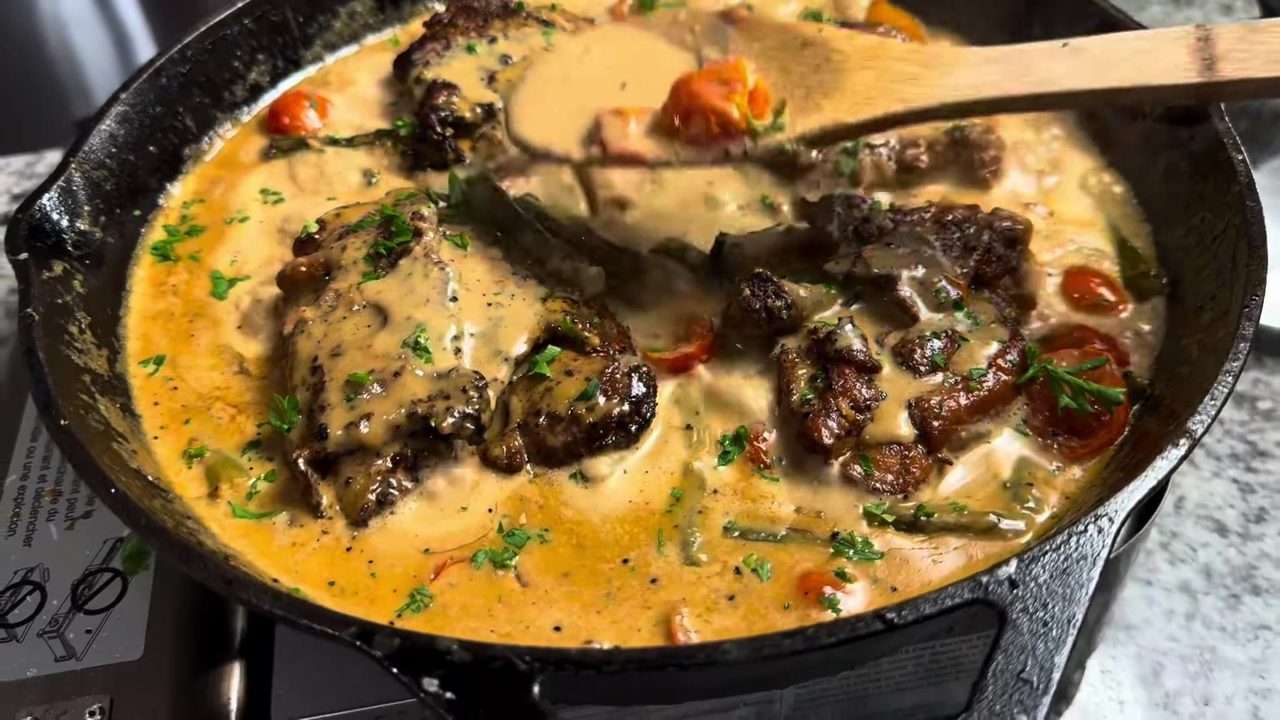 Watch me make it — video from my YouTube channel
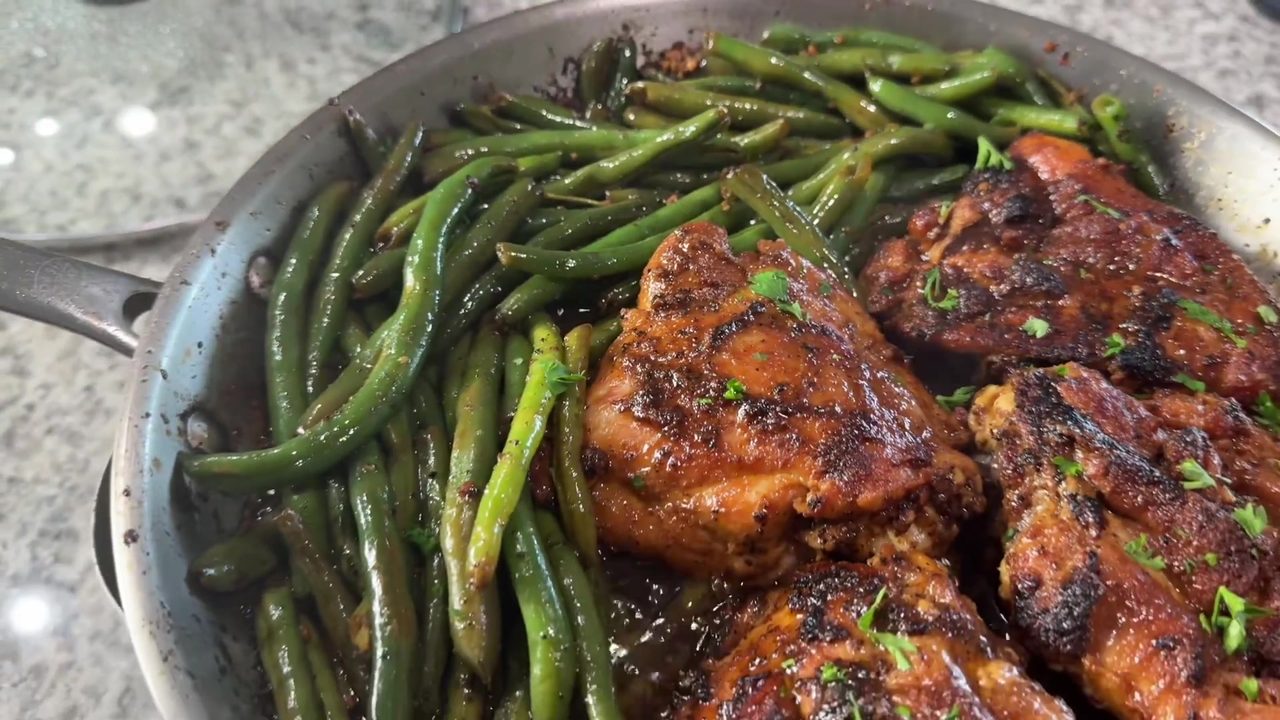
Skin-on chicken thighs sear skin-side down in a cast-iron skillet until charred, then pull out while sautéed asparagus, chicken broth, heavy cream and Parmesan build a sauce in the same pan, and the chicken goes back in skin-side up with cherry tomatoes to finish covered on low.
The chicken is only about 95% done after searing on purpose — it finishes cooking in that covered simmer, which is also what pulls the sauce's flavor into the meat. A meat thermometer reading 165°F held for 15 seconds is the real doneness test. One skillet, about 30 minutes of cooking, serves about 4.
This is one of those dinners that looks fancy but really only dirties one pan. I sear crispy, well-seasoned chicken thighs first, then build a creamy Parmesan sauce right in the same skillet with asparagus and cherry tomatoes. The chicken finishes cooking right in that sauce, so it stays juicy and soaks up all the flavor. Get your prep done up front and the rest comes together easy.
I filmed this one as my welcome-back video — at the end I actually apologize for the stretch when I wasn't dropping recipes, and this is the dish I chose to break the silence with. It's also the video where I slow down for the new cooks: I walk through mise en place — every bit of cutting and seasoning done before the pan gets hot, trash bag right at your station — because cooking gets smoother and faster once you work that way.
If you steal one trick from me here, make it this: the chicken comes out of the skillet at about 95% done. The sear gets you that good char, then the thighs go back in skin side up and finish low and covered in the creamy Parmesan sauce, so the sauce cooks right into the chicken.
The recipe
Creamy Chicken with Asparagus and Cherry Tomatoes (One Pan)
Ingredients
- 3 to 3 1/2 pounds skin-on chicken thighs (about 4 pieces; trim excess skin and pat dry)
- 10 ounces cherry tomatoes, halved or left whole
- asparagus, tough woody ends trimmed and spears cut in half — as much as sautés comfortably in your skillet
- fresh parsley, chopped, to taste (optional)
- olive oil, enough to coat the chicken all over
- 1 tablespoon oil, for searing (olive or avocado)
- salt, to taste
- Cajun seasoning, to taste
- black pepper, to taste
- minced garlic (or garlic paste), to taste
- 1/2 cup chicken broth
- heavy cream, to taste (enough to build a creamy sauce — no exact amount given in the video)
- 1/2 cup freshly grated Parmesan cheese (minimum; more to taste)
How to Make It
- Chop the parsley (optional) and set aside.
- Trim the tough back ends off the asparagus and cut each spear in two.
- Halve the cherry tomatoes (or leave them whole) and set aside.
- Trim the excess skin off the chicken thighs and pat them dry.
- Coat the chicken with olive oil so the seasoning sticks.
- Season the chicken all over with salt, Cajun seasoning, and black pepper, rubbing it under the skin.
- Heat a cast-iron skillet, then add 1 tablespoon of oil (just enough to cover the bottom).
- Lay the chicken in the skillet skin side down.
- Sear about 4 minutes, until the skin picks up a good char, then flip. Cook the second side — the meatier, fattier side, which needs the longest — about 5 minutes, until the chicken reaches 165°F and holds that temp for at least 15 seconds.
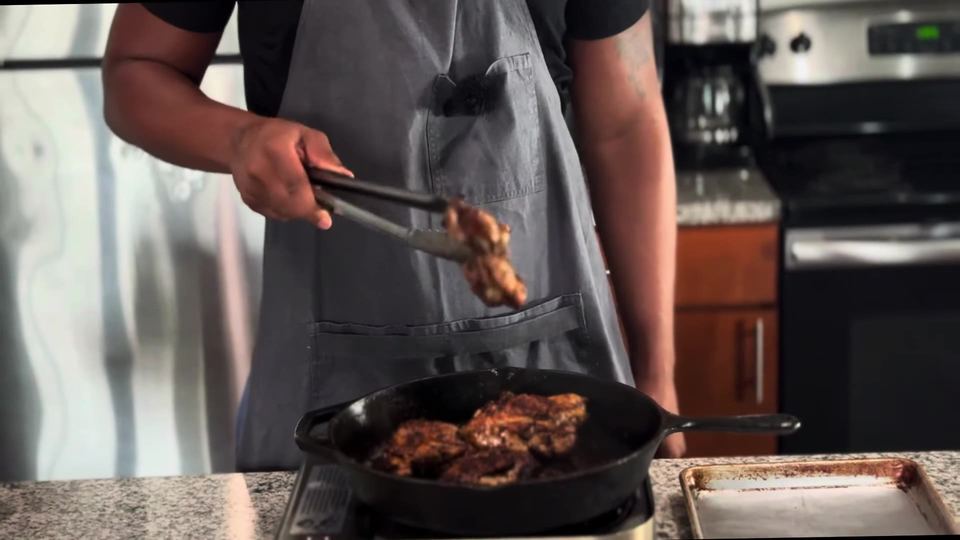
- Remove the chicken to a plate and set aside (it will finish cooking in the sauce).
- Add the asparagus to the same skillet and sauté about 5 minutes.
- Stir in the minced garlic and a pinch of salt.
- Pour in 1/2 cup chicken broth.
- Stir in the heavy cream to start the sauce.
- Season the sauce with more Cajun seasoning and a little more salt, tasting as you go.
- Stir in the Parmesan cheese (at least 1/2 cup) until the sauce is creamy and bubbling.
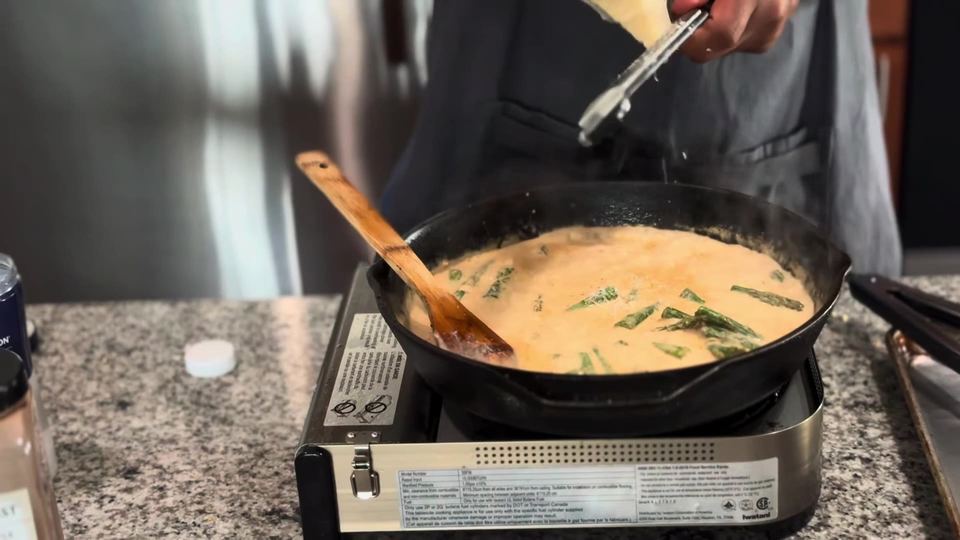
- Return the chicken to the pan skin side up.
- Add the cherry tomatoes.
- Cover with a lid and simmer on low heat for 10 to 15 minutes, until the chicken is cooked through.
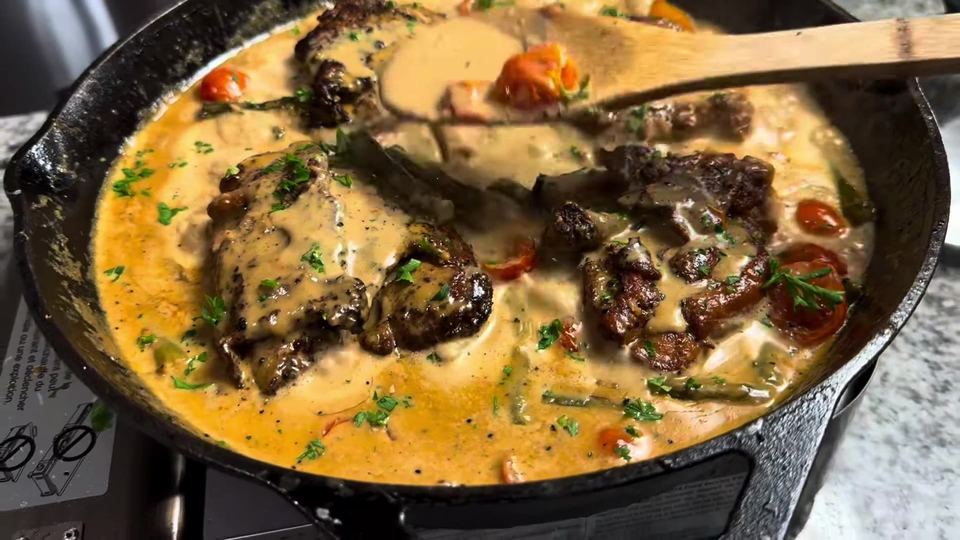
Curtis's Tips
- Get your prep done first — all the cutting and seasoning out of the way — so the cooking goes smoothly. Keep a trash bag at your station to stay clean as you go.
- Parsley is optional, but I like it for the nice little minty, nutty flavor it adds.
- Cherry tomatoes can be cut or kept whole — I like to cut mine.
- The back, bottom part of the asparagus is too hard to eat, so trim it off.
- You don't have to wash the chicken — I've done the research, and you don't need to clean it. Clean it if you want to.
- Coat the chicken in oil before seasoning: it helps the seasoning stick and improves the texture. Olive or avocado oil are best for sautéing meats, but any oil on hand works.
- Use a cast-iron skillet if you can — it heats evenly with no cold spots, which is great for searing. Any skillet works.
- You don't need many pots. This is the only pot you need — the whole dish cooks in one skillet.
- Use a meat thermometer (especially if you're new to cooking): sear to 165°F and hold for 15 seconds.
- Cook the meatier, fattier side the longest.
- After searing, the chicken is only about 95% done — don't pick at it yet; it finishes cooking in the sauce.
- For the cheese, freshly grated Parmesan melts better and gives you better results — add as much as you want, but at least 1/2 cup.
- Season the sauce to taste and keep tasting as you go.
Why this works
Cast iron is the pan I reach for here because the whole skillet heats up with no cold spots, and that even heat is what gets the good char on the skin. The flip isn't fifty-fifty, either: the meatier, fattier side cooks the longest — about five minutes to the first side's four. The sauce gets built in a set order: half a cup of chicken broth first, the heavy cream on top of that, then the same salt, Cajun seasoning, and black pepper that went on the chicken, so the sauce and the thighs carry one flavor. Once the Parmesan has it bubbling and creamy, the chicken goes back in skin side up and finishes low and covered — that's what cooks the sauce into the chicken instead of leaving it sitting on top.
- Olive oil before the seasoning — it helps the seasoning stick, and it helps the texture too.
- Freshly grated Parmesan — it melts a lot better, and half a cup is the minimum, not the ceiling.
FAQ
Do I have to wash the chicken before seasoning it?
No. I know that's a controversial statement, but I've done the research and you don't have to clean your chicken — if you want to clean it, clean it. Either way, trim off the extra skin and pat the thighs dry before the oil and seasoning go on.
How much heavy cream goes in the sauce?
The video doesn't pin a number on this one — what I watch for instead: the half cup of chicken broth goes in first, then the cream, then I taste as I go. When the Parmesan melts in and the sauce is bubbling and creamy, it's ready for the chicken.
Do I need a cast-iron skillet?
No — any skillet you have works. I like cast iron because the whole pan heats up with no cold spots, which is exactly what you want when searing chicken. Whichever pan you pick, you don't need many pots — this is the only one you need.
Why isn't the chicken done after searing?
It's not supposed to be — after the sear I call it 95% done, and it's not edible yet, so don't pick at it. The sear is for the char; the cooking finishes with the thighs back in the sauce, skin side up, covered, 10 to 15 minutes on low. New cooks: get a thermometer — 165 degrees Fahrenheit, held for at least 15 seconds.
Do the cherry tomatoes get cut or left whole?
Up to you — cut them or keep them whole; I like to cut mine. Either way they go in at the very end, after the seared chicken is back in the pan, right before the lid goes on for the final simmer.
Estimated nutrition, per serving (recipe makes about 4 servings): ~930 calories · 55 g protein · 75 g fat · 8 g carbs. Computed from the ingredient list using standard reference values — an estimate, not a lab analysis; your exact brands and portions will vary.