Dirty Rice, Red Beans, and the Southern Rice-Pot Family Tree
I've got a handful of rice-pot dishes in the rotation that look like variations on the same idea — trinity, protein, rice, one pot — until you look at how each one actually gets built. My dirty rice with sausage and ground beef is the fastest of the bunch: brown, sauté, stir already-cooked rice in at the very end. My chorizo creole dirty rice takes that same trinity-and-rice idea and sends the whole pot into the oven instead of finishing it on the stove. My red beans and rice skips rice-in-the-pot entirely and simmers low for three hours before rice ever enters the picture. And my Puerto Rican rice runs its own rinse-toast-simmer method built around pigeon peas instead of a trinity centerpiece. Four pots, four different relationships between rice and heat — that's the family tree I want to walk through.
The quick one: dirty rice with sausage and ground beef
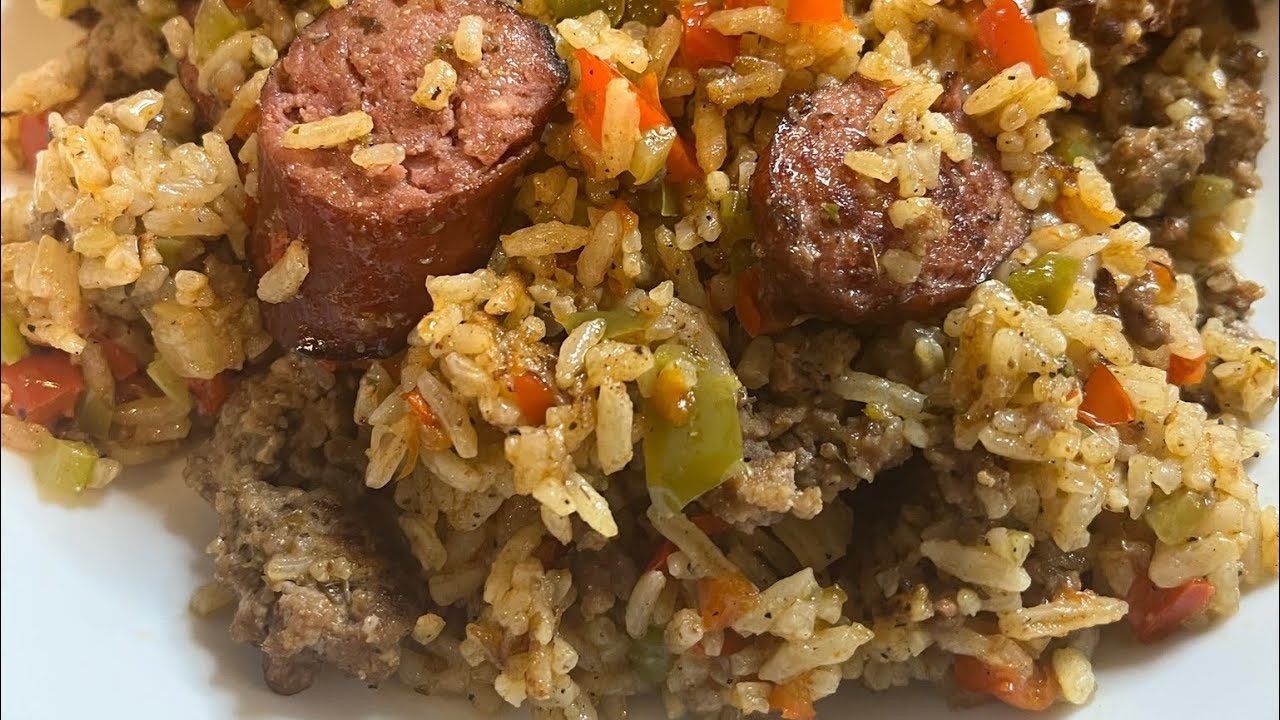
This is the weeknight version, and the trinity comes first: 1/2 cup diced red bell pepper, 1/2 cup diced green bell pepper, and 1/2 cup diced celery, plus one whole sweet chili pepper broken down and cut in. That mix gets set aside while the beef sausage browns in a hot wok or skillet on its own, then comes back out so the pan is free for the vegetables. The trinity sautés for about 4 minutes, then 1/2 pound of ground beef goes in with the seasonings and browns for another 3 to 4 minutes — sausage and ground beef, both in the same pan, which is the exact combination the dish is known for. The browned sausage gets folded back in, mixed in well, and only then does the rice show up, stirred straight into everything else. It doesn't matter whether that rice is fresh or a container from the night before — "it works fine both ways." There's no simmer stage here and no liquid to reduce; the rice is already cooked, so this pot is really about building the meat-and-vegetable base first and using the rice to carry it, not the other way around.
The oven-finished cousin: chorizo creole dirty rice
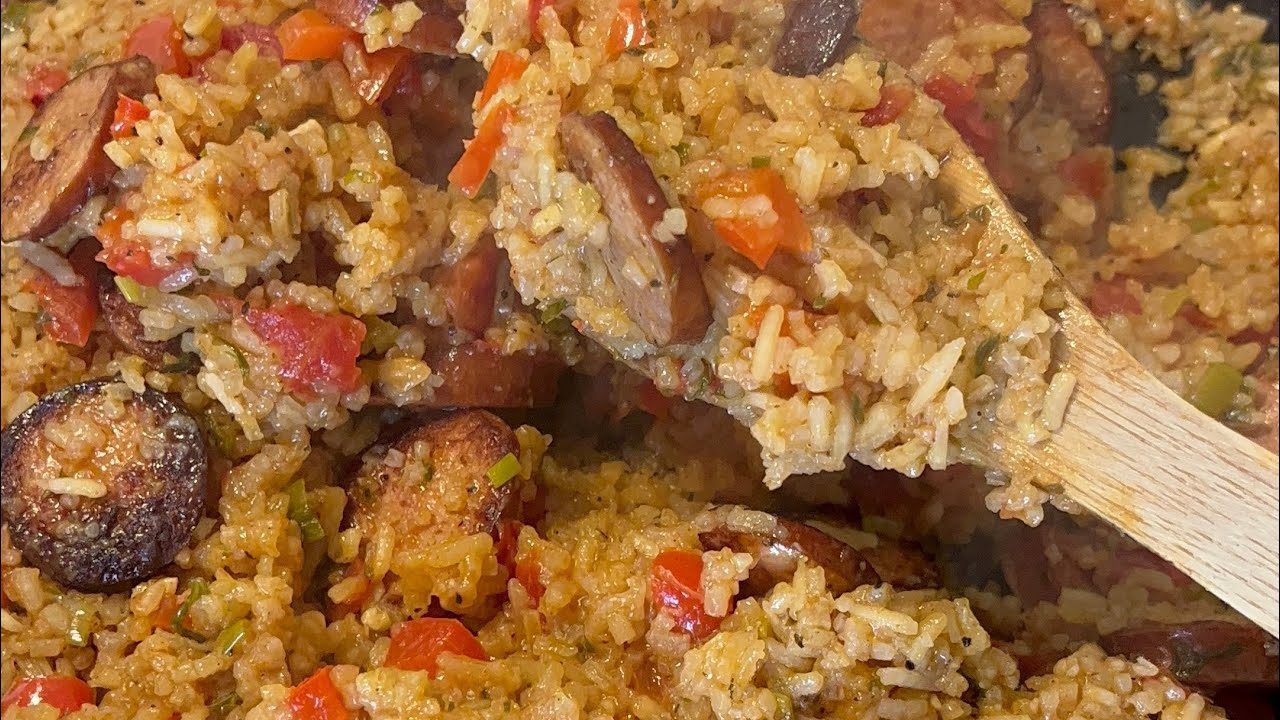
Same family, different machine. Chorizo browns first, cooked until it's no longer pink in the middle, then garlic and onions go in, followed by green and red bell peppers, all sautéed down together for 3 to 5 minutes. Where this one splits from the quick version: the rice goes in raw, 1 cup of long-grain, toasted right in the pan for 4 to 5 minutes before any liquid touches it. Paprika, Creole seasoning, salt, and pepper get stirred in, then 2 cups of chicken stock get incorporated slowly, scraping up any rice stuck to the bottom of the pot "so it cooks evenly." From there the whole pot goes into a 400°F oven for 30 to 35 minutes, and the cue to check on it is texture, not time — it should look thick and firm when it's ready. It's still a one-pot dish, just one that finishes in a different appliance than it started in.
The three-hour pot: red beans and rice
This is the slowest build of the four, and it starts the night before. The beans get soaked in water and refrigerated overnight — described flatly as "the most important part" of the whole dish, ahead of anything that happens the next day. When it's time to cook, andouille sausage renders down first to cook out its fat, then the trinity — onions, bell peppers, celery — goes in for 3 to 4 minutes, followed by garlic and seasonings. The soaked beans get mixed in well, then smoked turkey thighs (or really any meat on hand) and 3 to 4 cups of chicken broth. From there it's patience: stir every hour to check on it as it thickens, and after the third hour, break the meat down and smash some of the beans into the pot. There's a clear doneness cue built into the process itself: "when the meat is falling off the bone, that's how you know the beans are done." Rice only enters at the very last step, as the bed the finished pot gets served over — it's never cooked in the pot with the beans at all.
The side-dish cousin: Puerto Rican rice
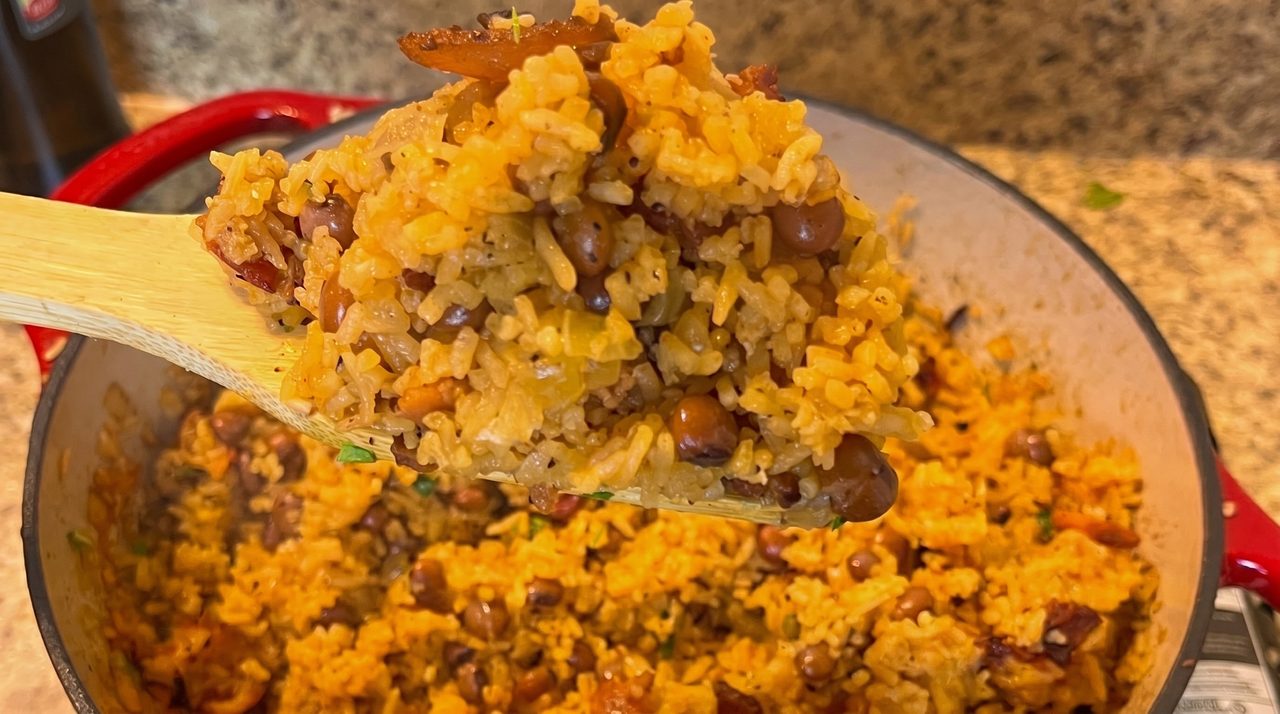
This one runs closer to a true pilaf and skips the trinity altogether. Onions get diced with the core trimmed out, then bacon (or ham, or no meat at all, if that's your preference) renders in the pot until it starts to brown. The onions and a little minced garlic sauté in that same fat until soft, and then 2 cups of long-grain rice — pre-rinsed until the water runs clear — goes in and toasts for about 3 minutes before any liquid is added. Two cups of chicken or beef broth and 2 cups of pigeon peas go in together, seasoned with adobo, cumin, and salt. Once it comes to a boil, the lid goes on and the heat drops to the lowest setting for 10 to 15 minutes, checked periodically, until it's thick and ready. Rinsing and toasting the rice before the liquid stage is the same move the chorizo creole pot uses — this is the one place two branches of the family tree actually overlap.
What actually separates these four pots
Line them up and the real split isn't Cajun versus Puerto Rican, it's what happens to the rice. Dirty rice folds already-cooked rice in at the end — the pot's whole job is building flavor for it to carry. Chorizo creole dirty rice and Puerto Rican rice both toast raw rice in the fat before any liquid goes in, a genuine pilaf technique, then split on the finish: one into a 400°F oven, the other to a stovetop simmer on the lowest setting. Red beans and rice skips rice in the pot entirely — the whole three-hour cook is about the beans and the meat, and rice is just what it's served over at the end. Soaking is only a red beans thing; the three rice dishes skip it, because raw rice cooks fast enough on its own once it's toasted.
More one-pot rice dishes if this is your speed
Two more from the catalog run on the same logic. My Cajun sausage and rice skillet is another raw-rice-in-the-pot build — andouille browned and set aside, bell pepper and green onion sautéed, rice stirred in and coated before diced tomatoes and chicken stock go in, sausage folded back, then a 20-minute covered simmer on the stovetop. And my egg fried rice runs the same already-cooked-rice move as dirty rice — bacon browned, scrambled eggs added, frozen vegetables and onions mixed in, then rice stirred through and finished with soy sauce, oyster sauce, and green onions in a wok. Different proteins, different pans, same underlying question each of these dishes answers a little differently: does the rice go in raw and cook with everything else, or does it show up already made and just get folded through.