My One-Pot Weeknight Dinner Rotation
The weeknight system behind these recipes is one pot, prep finished before the heat goes on, and a repeated 'brown it, pull it, bring it back' move — cook the meat first, set it aside, build the rest of the dish in that same pot, then reunite them at the end. The rotation itself spans a Cajun sausage-and-rice skillet, baked chicken and rice, fried cabbage with sausage, egg fried rice, a chicken fajita pasta (the one honest two-pot cheat), a no-boil lasagna, and a slower Sunday pot of red beans and rice.
I say it right on camera: I'm not a culinary chef, I'm a really good cook — and if I can do it, that just means you can do it. There's no restaurant training behind my weeknight dinners. There's a system, and the system is simple: most nights, dinner happens in one pot or one skillet, the prep happens before the heat comes on, and the same handful of moves shows up in almost every dish I make.
Here's how it actually works.
Why one pot
It's not just about washing fewer dishes (though that's real). One pot is where the flavor is. When I make my baked chicken and rice, I sear the thighs skin side down, pull them out, and the carrots and onions go straight into that same skillet to pick up all that seasoning that was stuck on the chicken. That browned layer is free flavor, and a second pan throws it away.
The other reason is control. If everything passes through one vessel, I always know what's in the dish, because I watched every layer go in.
The move that makes it all work: brown it, pull it, bring it back
If you've watched more than two of my videos, you know this one. In the Cajun sausage and rice skillet I brown the andouille about three to four minutes so each side is browned really well, then set it aside — "you guys know me, I like to separate it and bring it back." Same thing with the smoked beef sausage in my fried cabbage, and the bacon in my egg fried rice: cook it until it's golden, pull it, take out as much grease as you can, build the rest of the dish in the same pot, and bring the meat back in.
You can leave the meat in the whole time — I say that in the videos too. But separating and bringing it back is the habit that makes a one-pot dinner eat like a two-pan dinner.
The rotation
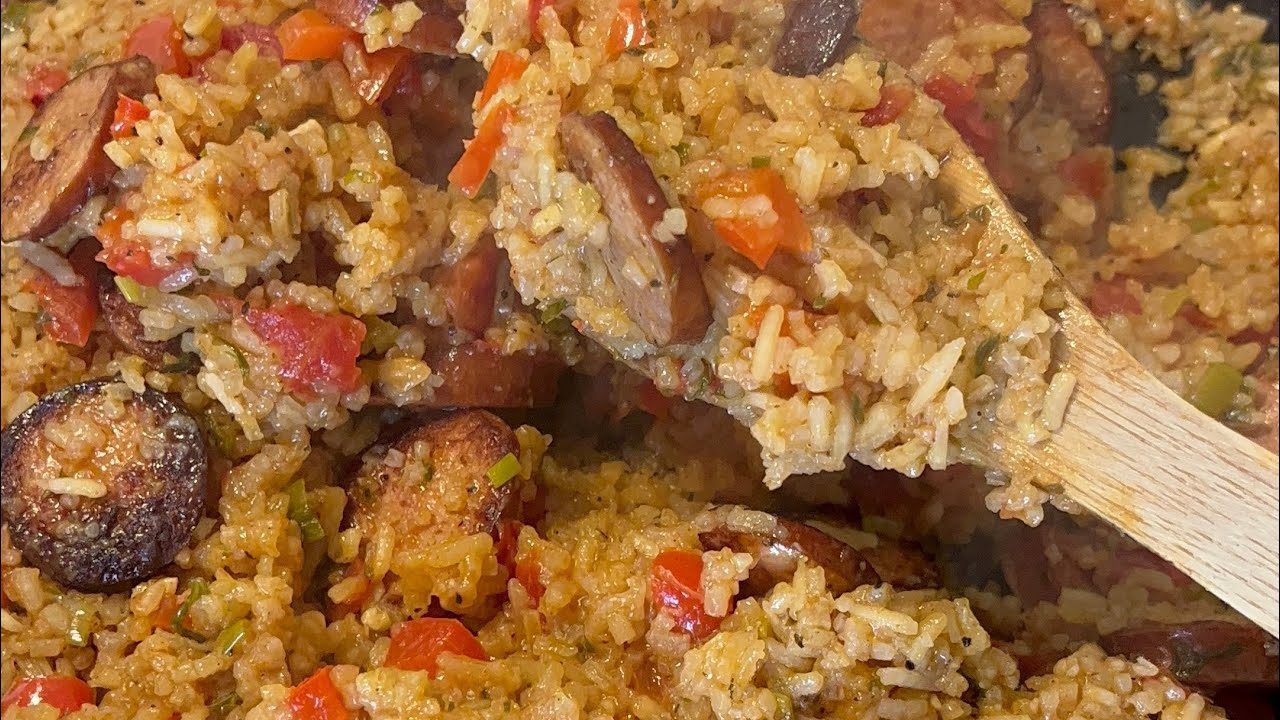
The template: Cajun sausage and rice skillet. One cup of rice rinsed until the water runs clear, a cup and a half of chicken stock, 15 ounces of diced tomatoes, lid on, high heat until it boils, sausage back in, then down to a simmer for 20 minutes. Almost everything else in my rotation is some version of this pattern.
The oven one: spicy baked chicken and rice. Cast iron — that's typically what I cook all of my dishes in. Heat it on medium-high until it starts to smoke, thighs skin side down four to five minutes, flip for five to six, then rice, broth, and the chicken goes back on top before the whole skillet rides into a 450°F oven for 10 to 15 minutes. One warning I give in the video: the cayenne is very spicy — only put about a teaspoon.
The vegetable-heavy one: fried cabbage with smoked beef sausage. A whole cabbage, diced red and green bell pepper and white onion, and sausage cut into cubes about the size of a nickel — a little thicker than the vegetables so it holds up. Fifteen minutes keeps the cabbage crisp, 15 to 20 if you like it softer; I like mine more crisp, not soggy. And yes, one full stick of butter. I mean it — "it was delicious, trust me on that one."
The fastest: egg fried rice. Bacon in the wok until golden brown, grease drained, scrambled eggs, frozen vegetables and onions, two cups of rice — that fed two of us — then dark soy, oyster sauce, soy sauce, and I go heavy on the green onions. When there's no plan, this is the plan.
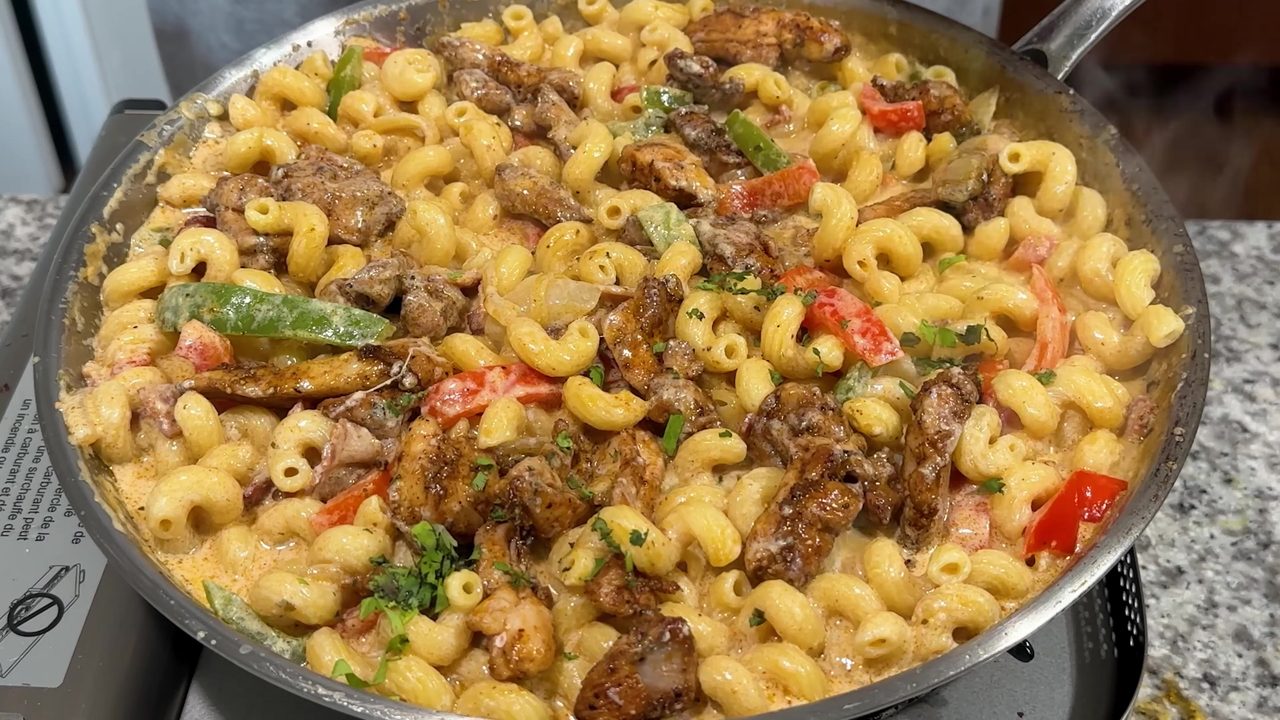
The honest cheat: chicken fajita pasta. I'll be straight with you — this one uses a second pot to boil the noodles, so it's not technically one-pot. But it earns its spot because, as I tell all my busy professionals in the video, it takes less than 30 minutes. The trick that keeps it in the skillet family: boil the cavatappi only to al dente, save a cup of that starchy pasta water, and finish the noodles right in the cream sauce so they soak up the flavor.
The family bake: no-boil lasagna. No boiling the noodles — trust the process. They go in dry, fully covered in sauce, and cook inside it, which makes them richer in flavor. Always end with sauce on top, never a bare noodle, foil on the pan, 400°F for 45 minutes up to an hour, then let it rest 10 minutes. The slice should come out firm — "if pasta didn't come out firm like this, it means something went wrong."
The Sunday pot: red beans and rice. Not a weeknight cook — it's about three hours — but it's how the rotation gets its anchor. Beans soaked overnight in the fridge (the most important part), andouille rendered first, trinity in for three to four minutes, then it just needs a stir every hour. After the third hour I break down the smoked turkey and smash some of the beans. When the meat is falling off the bone, it's done. Serve it over rice.
The prep habit that makes weeknights possible
In the Cajun skillet video I call it mise en place — everything within arm's reach. It's all about working smarter. Before the pan is hot: vegetables diced, garlic chopped, sausage cut, stock measured, rice rinsed, and all the seasonings mixed together in one bowl so they go in as one move instead of six. Cutting boards come out once.
And I prep forward. In that same video I'm chopping green onions and I cut a little extra for "a dish that I'm prepping for tomorrow." That's the whole leftover philosophy, honestly — less about saving finished food, more about tonight's cutting board doing part of tomorrow's work. Same with the lasagna cheese: I grate my own (the pre-shredded stuff has a coating that keeps it from melting right) and keep the mozzarella and cheddar separate "just in case I don't use it all."
Fixes I learned on camera
- Foil is the rice fix. In the Cajun skillet I noticed the rice cooks a lot better with aluminum foil under the lid — it keeps all the steam and heat in so it cooks evenly. Foil goes on the lasagna pan too.
- Don't season meat you're about to strain. In the lasagna, the beef and Italian sausage get browned plain, strained, then seasoned — otherwise "you don't wanna lose all of that seasoning" down the drain.
- Go easy on the sauce. Too much and the lasagna gets really, really watery; a little sugar balances the acidity without making it sweet.
- Pat the chicken dry. The seasoning on my baked chicken has cornstarch in it, so it needs a dry surface and a little olive oil to stick.
That's the system. No fancy technique, one pot most nights, and the same few habits doing the heavy lifting. Pick two dishes from this list, run them next week, and you're already in the rotation.