Marry Me Chicken with Skin-On Thighs
Marry me chicken here uses skin-on thighs instead of the more common breasts, because the extra fat keeps them from drying out during the 25-to-30-minute bake and the skin gives something to crisp and season under. The build: rub a seasoning paste under the skin, sear 5 to 6 minutes a side for color only, build the cream sauce in that same pan with heavy cream (not half-and-half, so it holds up against the added flour), then bake the sauced chicken at 450°F until it clears 165°F internally.

Most marry me chicken recipes you'll find online use breasts. Mine uses skin-on thighs, and once you understand why, you'll probably switch too. Thighs hold more fat, so they don't dry out under a 25-30 minute bake, and the skin gives you something to crisp and something to season under — two textures a boneless breast just can't offer. Here's exactly how I build it.
The seasoning paste goes under the skin
Before anything hits a pan, I mix a seasoning blend — salt, pepper, paprika, thyme, garlic powder, and Cajun seasoning if you want it — with a tablespoon or two of avocado oil until it forms a paste. That paste gets rubbed all over the chicken thighs, including under the skin, not just on top of it. The oil in that paste isn't just for flavor spread — it "helps a lot when it's time to actually marinate the chicken," meaning it lets the seasoning actually cling and soak in instead of sliding off in the pan.
Browning is not cooking
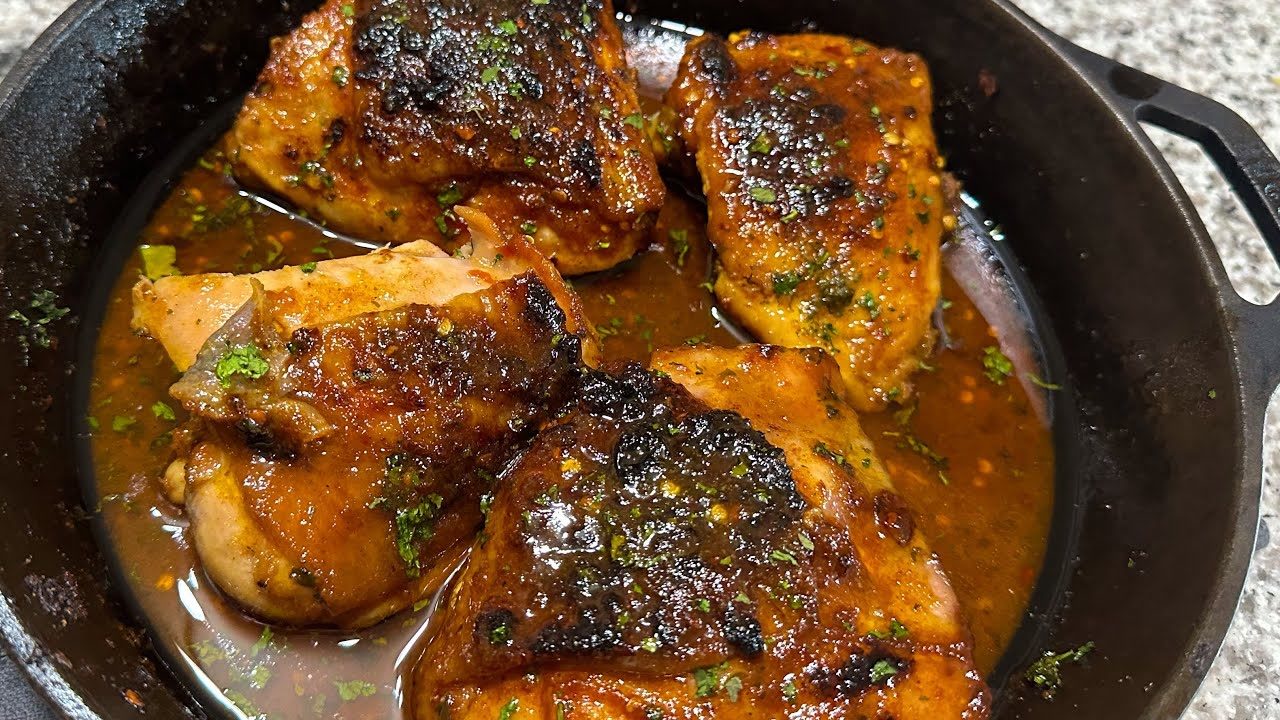
Here's the part people rush: the sear. Thighs go into a hot cast-iron skillet with a tablespoon of oil, flat side down, for 5-6 minutes per side. That's browning only — the chicken is not done at this point, it's just building color and fond. The chicken finishes in a 450°F oven for 25-30 minutes after the sauce goes on, with checks at the 15- and 20-minute marks and a temp check before serving to confirm it's past 165°F internally.
And don't walk away during the sear. That's not a throwaway warning — my own chicken came out "a little charred" once from doing exactly that. The skillet needs eyes on it the whole 10-12 minutes.
The sauce starts in the empty pan
Once the chicken comes out to rest, 3 tablespoons of butter go into that same empty skillet specifically to scrape up the browned seasoning bits stuck to the bottom — the fond is the flavor base for everything that follows. Diced onion and minced garlic go in before the butter's even fully melted, then a cup of chicken broth and the sun-dried tomatoes get added and brought to a boil.
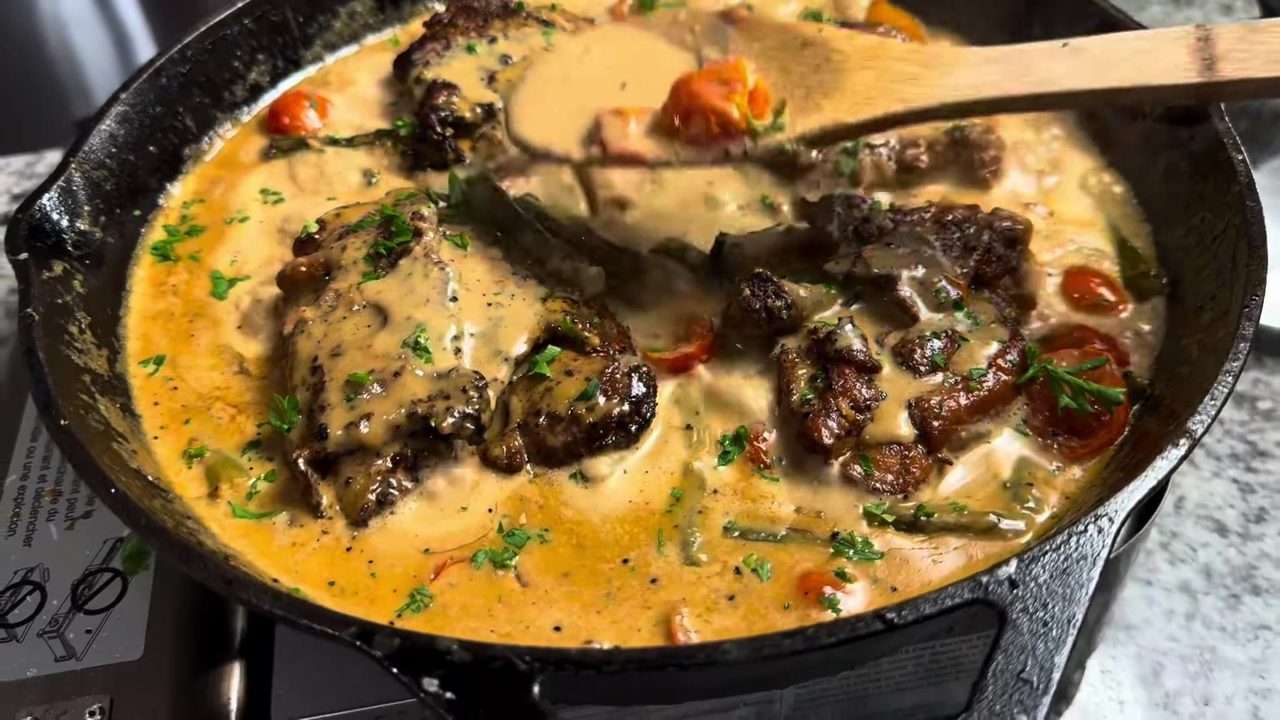
From there it's a tablespoon of flour stirred in, then 2 cups of heavy cream — heavy cream specifically, not half-and-half, because it makes a thicker consistency that actually works with that tablespoon of flour. Half-and-half will thin the sauce out and fight the roux instead of backing it up.
The cheese has to keep moving
Fresh spinach goes in first, as much as you like, then freshly grated Parmesan — I use about 2 cups, though 1 cup works if you want it lighter. The instruction here matters: keep stirring while the cheese melts in, so it doesn't burn to the bottom of the pan. Once the cheese breaks down and the sauce condenses, the heat goes off, the chicken goes back in, and the tops get coated in sauce before the whole skillet goes into the oven.
The flour amount is honestly a little loose
If you watch closely, even I go back and forth on the flour. On camera I say "maybe a tablespoon and a teaspoon, a little bit more than a tablespoon," then settle on adding a tablespoon. The written description on the video, though, lists 1/4 cup of flour if you want a thicker, more roux-style sauce. Both work — a tablespoon gives you a looser, creamier sauce, while a quarter cup pulls it closer to a gravy. Use whichever fits how you're serving it: a thinner sauce spoons well over rice, a thicker one holds up better over pasta.
The Cajun seasoning on top follows the same "your call" logic. It's optional, sprinkled to taste for heat once the sauce is building. If you want that extra kick, I recommend Slap Ya Mama — and I'll say plainly, that's not a sponsored plug, it's just what's already in my pantry.
Where the same instincts show up elsewhere
The build-the-sauce-in-the-fond move isn't unique to this dish — I use the same logic in Cajun honey garlic chicken, where the garlic and butter left behind after searing become the base for a sweet-heat glaze instead of a cream sauce. And the heavy-cream-not-half-and-half rule shows up again in dishes like creamy chicken asparagus and Cajun fettuccine alfredo — anywhere I'm building a cream sauce with a little flour in it, thinner dairy just won't hold up the same way.
If skin-on thighs aren't your thing, grandma's secret chicken and lemon garlic butter chicken are two more places in the catalog where I lean on bone-in or skin-on cuts for the same reason — more fat, more forgiveness, more flavor built into the piece of meat itself before the sauce ever touches it.
The short version
Rub the seasoning paste under the skin, not just on top. Sear for color, not for doneness — 5-6 minutes a side, then let the oven finish it. Build the sauce in the same pan you seared in, so the fond does the work. Heavy cream, not half-and-half. Keep stirring while the cheese melts in. And don't walk away from the skillet — I learned that one the hard way, on camera, in front of everybody.